Mostrando las entradas para la consulta Sun Tzu ordenadas por relevancia. Ordenar por fecha Mostrar todas las entradas

Sun Tzu's Enduring Wisdom: Essential Maxims for a Life Without Regret

Sun Tzu, the legendary Chinese general, military strategist, and philosopher, penned The Art of War over two millennia ago. Yet, his insights into strategy, leadership, and understanding human nature remain remarkably relevant. This timeless treatise offers a profound toolkit for navigating not only the battlefield but also the complex landscapes of personal and professional life. For those seeking to cultivate foresight, resilience, and strategic acumen from a young age, immersing oneself in Sun Tzu's wisdom is an invaluable endeavor, a proactive measure against future regrets.

Introduction: The Enduring Relevance of Sun Tzu

In an era defined by rapid change and intricate challenges, the principles articulated by Sun Tzu in The Art of War offer a beacon of clarity. This foundational text transcends its military origins to provide a sophisticated framework for strategic thinking applicable across diverse fields, from sociology and anthropology to business and personal development. Understanding these maxims during youth is not merely an intellectual exercise; it is a foundational step towards building a life characterized by informed decisions and minimized future regrets. This exploration delves into the core tenets of Sun Tzu's philosophy, highlighting their significance for the formative years and beyond.

Core Principles for Early Cultivation

Sun Tzu’s philosophy is built upon a bedrock of interconnected principles that, when grasped early, can shape a more effective and ethical approach to life's myriad challenges. The emphasis is consistently on preparation, knowledge, and adaptability rather than brute force or impulsive action. Examining these core ideas provides a roadmap for developing a resilient mindset.

  • "Know your enemy and know yourself; in a hundred battles, you will never be defeated." This iconic quote underscores the paramount importance of comprehensive awareness. In personal terms, this translates to understanding one's own strengths, weaknesses, motivations, and emotional triggers, alongside a keen observation of the people and circumstances one encounters. Early self-reflection, perhaps aided by psychology resources, can foster this vital self-knowledge.
  • "The supreme art of war is to subdue the enemy without fighting." This principle highlights the power of diplomacy, strategy, and psychological leverage. It teaches that the most effective solutions often involve de-escalation and achieving objectives through indirect means, minimizing conflict and damage. Learning to negotiate, empathize, and find mutually beneficial outcomes are skills best honed early in life.
  • "In the midst of chaos, there is also opportunity." Sun Tzu recognized that moments of crisis are not solely threats but can also be fertile ground for innovation and advancement. Cultivating a mindset that can identify opportunities amidst disruption is a crucial skill for navigating an unpredictable world. This requires a degree of intellectual flexibility and an optimistic yet pragmatic outlook.
"The wise warrior avoids the fight."

The Imperative of Self-Mastery

A significant portion of Sun Tzu's strategic thinking is dedicated to the importance of internal discipline and control. Before one can effectively influence external circumstances, mastering oneself is paramount. This internal focus is critical for developing the kind of character that can withstand pressure and make sound judgments.

  • Discipline and Control: Sun Tzu repeatedly emphasizes the need for strict discipline within an army, which by extension applies to personal conduct. This involves managing impulses, adhering to principles, and maintaining composure under duress. Developing habits of self-discipline in youth—whether in studies, physical training, or managing one's time—builds a strong foundation for adult life.
  • Adaptability: "Water shapes its course according to the nature of the ground over which it flows; the soldier works out his victory in relation to the foe whom he is facing." This analogy stresses the necessity of flexibility. Rigid adherence to a plan, when circumstances change, leads to failure. Learning to adapt strategies, pivot when necessary, and respond dynamically to evolving situations is a skill that benefits immensely from early practice. This is particularly relevant in understanding how societies and cultures change over time, a core theme in history.
  • The Importance of Planning: Sun Tzu believed that victory was often decided before the battle even began, through meticulous planning and assessment. Applying this to life means understanding the value of foresight, setting goals, and thinking through potential consequences before acting. This proactive approach reduces the likelihood of reactive, regret-inducing decisions later in life.

Navigating Interpersonal Dynamics

Beyond self-mastery, Sun Tzu provides invaluable insights into understanding and interacting with others, whether allies or adversaries. This aspect of his teaching is crucial for building successful relationships and collaborations.

  • Reading Intentions: "Appear weak when you are strong, and strong when you are weak." This advice speaks to the art of deception and the importance of understanding the underlying intentions of others. In interpersonal contexts, it encourages a thoughtful approach to revealing one's own capabilities and assessing the true motives of those around you. This requires keen observation and an understanding of anthropological nuances in human interaction.
  • Unity and Cohesion: Sun Tzu stressed that a united force is a powerful force. For individuals, this translates to the importance of building strong relationships, fostering trust, and working collaboratively. Understanding the dynamics of group cohesion, from sociological perspectives, can help individuals become better team players and leaders.
  • The Art of Persuasion: While not explicitly a treatise on rhetoric, Sun Tzu's strategies imply a deep understanding of how to influence others. This involves knowing when to push, when to yield, and how to present arguments in the most effective manner. Developing strong communication skills early can prevent misunderstandings and foster more constructive relationships.
"If you know the enemy and know yourself, you need not fear the result of a hundred battles."

Cultivating Strategic Foresight

Perhaps the most profound takeaway from Sun Tzu is the emphasis on foresight—anticipating future events and planning accordingly. This proactive stance is fundamental to avoiding future regrets, as it allows for preparation and mitigation of potential challenges.

  • Assessing the Situation: "The general who wins a battle makes many calculations in his temple ere the battle is fought." This highlights the need for thorough analysis before committing to a course of action. In life, this means pausing to consider all angles, potential outcomes, and risks associated with major decisions, whether related to career, relationships, or personal growth.
  • Timing and Opportunity: Sun Tzu's strategies are deeply intertwined with timing. Knowing *when* to act is as crucial as knowing *how* to act. Cultivating patience and learning to recognize opportune moments, rather than acting impulsively, can lead to far more successful and less regrettable outcomes. This relates to understanding historical patterns and cycles, as explored in historical analyses.
  • Avoiding Unnecessary Conflict: The ultimate goal for Sun Tzu was to achieve victory with minimal cost. This principle translates powerfully to avoiding personal conflicts, unnecessary risks, and situations that could lead to future hardship. A young person who internalizes this can save themselves immense future pain and struggle.

Practical Application: The DIY Strategist

Integrating Sun Tzu's principles into daily life doesn't require a military background. It's about adopting a mindset of thoughtful action and continuous learning. Here’s a practical guide to applying these ancient strategies:

  1. Daily Self-Assessment: At the end of each day, dedicate 5-10 minutes to reflect. Ask yourself:
    • What were my key objectives today?
    • Did I achieve them? Why or why not?
    • What did I learn about myself or others?
    • What could I have done differently for a better outcome?
    This practice mirrors Sun Tzu's emphasis on battlefield assessment.
  2. Identify Potential "Battles": Before entering a potentially challenging situation (e.g., a difficult conversation, a job interview, a complex project), take time to analyze it.
    • What is the objective?
    • Who are the key players involved?
    • What are their likely motivations and strategies?
    • What are my own strengths and weaknesses in this context?
    • What are the potential risks and how can I mitigate them?
    This is the "calculating in the temple" applied to everyday challenges.
  3. Practice "Winning Without Fighting": Look for opportunities to resolve conflicts or achieve goals through diplomacy, compromise, or strategic positioning rather than confrontation.
    • Can this issue be resolved through clear communication and understanding?
    • Is there a way to achieve my objective by helping someone else achieve theirs?
    • Can I anticipate objections and prepare thoughtful responses?
    This fosters more sustainable and less damaging solutions.
  4. Develop Adaptability Exercises: Intentionally put yourself in situations that require flexibility.
    • Try a new route to work or school.
    • Learn a new skill outside your comfort zone (e.g., a simple DIY project, a new recipe, basic coding).
    • Engage with people who hold different viewpoints and try to understand their perspective.
    These small acts build resilience and the ability to pivot when needed.
  5. Seek Knowledge Continuously: Make a habit of reading broadly. Explore works on anthropology, history, psychology, and strategy. Understanding different cultures, historical events, and human behaviors provides the deep knowledge base Sun Tzu advocated.

Frequently Asked Questions

Q1: Is Sun Tzu's advice only for military leaders?
A1: Absolutely not. While written from a military perspective, the core principles of strategy, self-awareness, understanding others, and foresight are universally applicable to business, personal relationships, and navigating life's challenges.

Q2: How can someone "know themselves" as Sun Tzu suggests?
A2: Self-knowledge is cultivated through introspection, seeking feedback from trusted individuals, engaging in self-reflection activities (like journaling), and understanding one's emotional responses and biases. Studying fields like psychology can also provide valuable frameworks.

Q3: What does "winning without fighting" practically mean in modern life?
A3: It means resolving conflicts through negotiation, compromise, effective communication, and strategic positioning rather than direct confrontation or aggression. It prioritizes finding mutually beneficial solutions and de-escalating potential disputes.

Q4: When is the best time in life to learn Sun Tzu's principles?
A4: The earlier, the better. Learning these principles during youth allows individuals to develop strategic thinking, self-discipline, and interpersonal skills that can prevent costly mistakes and foster a more successful and fulfilling life trajectory.

Conclusion: A Legacy of Wisdom

Sun Tzu's historical insights, encapsulated in The Art of War, offer a profound and enduring guide for living a more strategic, self-aware, and less regretful life. By internalizing the principles of knowing oneself and one's circumstances, prioritizing preparation over reaction, and seeking to achieve objectives with wisdom and minimal conflict, individuals can navigate the complexities of existence with greater efficacy and peace. For the young, embracing this ancient wisdom is not just an intellectual pursuit; it is an investment in a future characterized by informed choices and profound understanding. The legacy of Sun Tzu is a testament to the timeless power of strategic thought, a gift to be unwrapped and applied throughout life's journey.

``` ```json { "@context": "https://schema.org", "@type": "FAQPage", "mainEntity": [ { "@type": "Question", "name": "Is Sun Tzu's advice only for military leaders?", "acceptedAnswer": { "@type": "Answer", "text": "Absolutely not. While written from a military perspective, the core principles of strategy, self-awareness, understanding others, and foresight are universally applicable to business, personal relationships, and navigating life's challenges." } }, { "@type": "Question", "name": "How can someone \"know themselves\" as Sun Tzu suggests?", "acceptedAnswer": { "@type": "Answer", "text": "Self-knowledge is cultivated through introspection, seeking feedback from trusted individuals, engaging in self-reflection activities (like journaling), and understanding one's emotional responses and biases. Studying fields like psychology can also provide valuable frameworks." } }, { "@type": "Question", "name": "What does \"winning without fighting\" practically mean in modern life?", "acceptedAnswer": { "@type": "Answer", "text": "It means resolving conflicts through negotiation, compromise, effective communication, and strategic positioning rather than direct confrontation or aggression. It prioritizes finding mutually beneficial solutions and de-escalating potential disputes." } }, { "@type": "Question", "name": "When is the best time in life to learn Sun Tzu's principles?", "acceptedAnswer": { "@type": "Answer", "text": "The earlier, the better. Learning these principles during youth allows individuals to develop strategic thinking, self-discipline, and interpersonal skills that can prevent costly mistakes and foster a more successful and fulfilling life trajectory." } } ] }
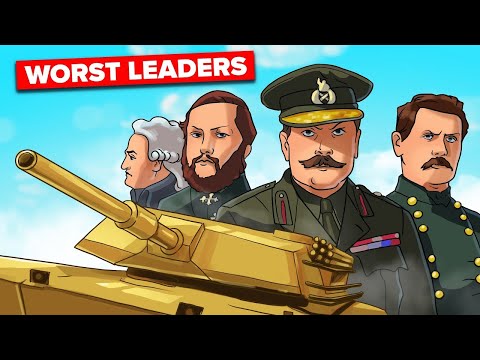
Worst Military Leaders: An Anthropological and Historical Analysis

Introduction: Defining Military Ineptitude

The annals of history are replete with tales of strategic brilliance and valiant victories. However, for every triumphant general, there exists a less celebrated counterpart whose decisions led to devastating defeats and immense suffering. This exploration delves into the nature of military ineptitude, moving beyond simple blame to understand the complex interplay of factors that can render even the most well-intentioned leaders catastrophically ineffective. We aim to dissect the characteristics, circumstances, and consequences associated with the worst military leaders, offering a nuanced perspective grounded in anthropology, history, and sociology.

The intention behind this analysis is to provide readers with a rigorous framework for understanding historical military failures. By examining specific examples and drawing upon academic disciplines, we seek to fulfill the search intent of those interested in the strategic, psychological, and societal dimensions of warfare and leadership.

The Weight of Command: Historical Perspectives on Military Leadership

Throughout history, the role of a military leader has been idealized, often portrayed as a paragon of courage, strategic acumen, and unwavering resolve. Yet, the reality of command is far more complex, fraught with immense pressure, imperfect information, and the grave responsibility for the lives of thousands. From ancient empires to modern conflicts, the success or failure of entire nations has hinged on the competence of their military commanders.

The study of history reveals recurring patterns in leadership, both successful and disastrous. Early military thinkers, such as Sun Tzu, emphasized the importance of understanding oneself and the enemy, the art of deception, and the strategic avoidance of unnecessary conflict. Conversely, leaders who disregarded these principles often found themselves on the wrong side of pivotal battles.

"Victorious warriors win first and then go to war, while defeated warriors go to war first and then seek to win." – Sun Tzu, The Art of War.

This aphorism underscores a critical aspect of military leadership: the necessity of meticulous preparation and strategic foresight. Leaders who fail to cultivate these qualities, often driven by overconfidence, hubris, or a fundamental misunderstanding of their adversary and the operational environment, are prone to catastrophic errors.

Analyzing Catastrophic Failures: Case Studies in Military Mismanagement

Examining specific historical figures provides crucial insight into the manifestation of military ineptitude. These leaders, through a series of miscalculations and flawed strategies, left indelible marks of failure on the historical record.

  • Napoleon Bonaparte's Russian Campaign (1812): While Napoleon is often lauded for his military genius, his disastrous invasion of Russia exemplifies the perils of overextension and underestimation of an opponent. The logistical nightmares, the brutal Russian winter, and the scorched-earth tactics employed by the Russians decimated the Grande Armée, marking a significant turning point in his career.
  • General George Custer at the Battle of Little Bighorn (1876): Custer's impetuous decision to divide his forces and attack a superior Native American encampment, despite warnings and intelligence to the contrary, resulted in the annihilation of his command. His overconfidence and disregard for tactical prudence led to one of the most infamous defeats in American military history.
  • Field Marshal Douglas Haig during World War I: Often criticized for his leadership during the Battle of the Somme and other major offensives on the Western Front, Haig's adherence to costly frontal assaults, despite unprecedented casualties and minimal territorial gains, highlights a rigid and unimaginative approach to warfare in an era of rapidly evolving military technology.

These examples, drawn from different eras and contexts, illustrate common threads: a failure to adapt to changing circumstances, an underestimation of the enemy, and a disregard for the human cost of military action. The archaeological and historical records of these campaigns offer tangible evidence of their devastating consequences.

The Psychology of Command: Cognitive Biases and Poor Decision-Making

Beyond strategic errors, the psychological makeup of military leaders plays a pivotal role. Understanding cognitive biases, personality traits, and the pressures of command is crucial for a comprehensive analysis. The field of psychology offers valuable frameworks for deconstructing these elements.

Confirmation Bias: Leaders may actively seek out or interpret information in a way that confirms their pre-existing beliefs, ignoring evidence that contradicts their plans. This can lead to dangerous overconfidence and a refusal to reconsider flawed strategies.

Groupthink: In tightly knit command structures, dissent can be suppressed, leading to a consensus that prioritizes harmony over critical evaluation. This can prevent vital counterarguments or alternative perspectives from being heard.

"The greatest enemy of knowledge is not ignorance, it is the illusion of knowledge." – Stephen Hawking.

This quote by Hawking resonates deeply within the context of military leadership. A leader who believes they possess all the answers, or who surrounds themselves with sycophants, is particularly vulnerable to making decisions based on an illusion of understanding rather than on objective reality.

Stress and Fatigue: The immense pressure and long hours inherent in military command can impair judgment, leading to decision fatigue and emotional reactivity. Leaders under extreme duress may resort to simplistic, often disastrous, solutions.

An Anthropological View: Culture, Society, and the Military Leader

From an anthropological perspective, military leadership cannot be divorced from its cultural and societal context. The norms, values, and structures of a society shape the expectations placed upon its military leaders and influence the very nature of warfare itself.

Cultural Scripts: Different cultures possess distinct "scripts" for leadership, heroism, and warfare. A leader whose actions align with prevailing cultural narratives may be more readily accepted, even if their strategies are ultimately flawed. Conversely, a leader who deviates from these norms might face internal resistance, regardless of their potential effectiveness.

Social Structures: The hierarchical nature of military organizations, and indeed many societies, can influence decision-making. A leader's position within a social structure can grant them authority, but it can also insulate them from the realities faced by those on the ground, perpetuating a disconnect that leads to poor strategic choices.

Rituals and Symbolism: Military traditions, rituals, and symbolism often serve to reinforce group identity and loyalty. While these elements can be powerful tools for cohesion, an overemphasis on form over substance, or a rigid adherence to outdated traditions, can hinder adaptation and innovation in the face of modern challenges.

DIY Practical Guide: Analyzing Historical Military Strategies

Understanding historical military events requires critical engagement with primary and secondary sources. This guide provides a step-by-step approach to analyzing military strategies from an academic perspective, allowing you to apply principles of history and strategy in your own research.

  1. Identify the Core Objective: Determine the primary goal of the military campaign or battle being studied. Was it territorial conquest, defensive security, political leverage, or something else entirely?
  2. Research the Context: Understand the geopolitical situation, the available technology, the socio-economic conditions, and the cultural norms of the time. This context is crucial for evaluating the decisions made. Explore resources like scholarly articles on world history or detailed biographies of key figures.
  3. Analyze the Leadership: Investigate the background, training, and known decision-making patterns of the military leaders involved. Consider their adherence to established military doctrines or any deviations from them.
  4. Examine the Strategy and Tactics: Break down the specific plans and actions taken by each side. Consider troop deployment, logistical considerations, use of terrain, and innovative or conventional approaches.
  5. Evaluate the Information Available: Consider what intelligence each side likely possessed. Were leaders acting on incomplete or biased information? Were there opportunities for better reconnaissance or intelligence gathering?
  6. Assess the Outcomes: Analyze the immediate and long-term consequences of the strategies employed. Did they achieve the stated objectives? What were the human and material costs? Compare the effectiveness of different approaches.
  7. Consult Secondary Sources: Read analyses by reputable historians and military strategists. Compare their interpretations with your own findings to gain a broader understanding. Look for academic journals or books on specific military eras.

Frequently Asked Questions

What distinguishes a bad military leader from a simply unlucky one?

A bad military leader typically exhibits a pattern of poor decision-making stemming from flawed judgment, overconfidence, inability to adapt, or disregard for intelligence. An unlucky leader might face unforeseen circumstances or simply be on the wrong side of probability, despite competent leadership.

How do cultural factors influence military leadership?

Culture shapes the expectations of leaders, the acceptable methods of warfare, and the values that underpin military action. What is considered effective or heroic in one culture might be seen as reckless or barbaric in another.

Can a leader be brilliant in peacetime but a failure in war?

Absolutely. Peacetime leadership often involves administration, diplomacy, and long-term planning. Wartime leadership demands rapid decision-making under pressure, adaptability, and an understanding of tactical and strategic combat, which are different skill sets.

What role does technology play in mitigating poor leadership?

Advanced technology can provide better intelligence, improve communication, and enhance operational capabilities. However, it cannot compensate for fundamental flaws in strategic thinking or decision-making. Poor leadership can squander even the most advanced technological advantages.

Are there resources for further study on this topic?

Yes, numerous academic texts on military history, strategy, and the psychology of leadership are available. Additionally, historical documentaries and reputable online archives offer valuable insights. For instance, resources detailing the First World War or specific campaigns can provide in-depth case studies.

Conclusion and Final Reflection

The study of the worst military leaders is not merely an exercise in identifying historical failures; it is a critical endeavor that offers profound lessons for understanding the complexities of power, decision-making, and the human cost of conflict. By integrating insights from anthropology, history, and psychology, we gain a more comprehensive appreciation of the multifaceted nature of leadership and the conditions that can lead to catastrophic outcomes.

The recurring themes of hubris, inflexibility, and a disconnect from reality serve as enduring cautionary tales. As we continue to navigate a world where geopolitical tensions persist, understanding these historical precedents is more vital than ever. The pursuit of knowledge in these fields equips us not only to analyze the past but also to critically evaluate the present and strive for wiser, more effective leadership in the future.

El Patrimonio Cultural como Campo de Batalla: La Estrategia de la Destrucción en el Medio Oriente y sus Implicaciones para la Humanidad

La naturaleza de la Guerra ha evolucionado a lo largo de los milenios, trascendiendo el mero enfrentamiento bélico para convertirse en un intrincado tablero de ajedrez donde las estrategias se dirigen no solo a la aniquilación física del adversario, sino también a la reconfiguración de su identidad y su memoria colectiva. Si bien figuras como Sun Tzu, en su célebre obra El Arte de la Guerra, delinearon con maestría las tácticas para la victoria militar, a menudo se soslaya una dimensión estratégica de profunda resonancia: la destrucción deliberada del patrimonio histórico, cultural y religioso de una región. Esta táctica, lejos de ser un efecto colateral accidental, se configura como un arma poderosa, diseñada para moldear la mentalidad de las poblaciones conquistadas y asegurar un control más duradero y profundo sobre los territorios ocupados.

Contexto Histórico y Cultural: La Cuna de la Civilización

El Medio Oriente no es una región cualquiera; es, en un sentido profundo y fundamental, la cuna de la civilización humana. De sus tierras emanan las narrativas fundacionales de las grandes religiones monoteístas, los primeros sistemas de escritura y las bases de la organización social que han moldeado el desarrollo ético y la cosmovisión de vastas extensiones del planeta. El legado de esta zona es, por lo tanto, un patrimonio compartido por toda la humanidad, cuya preservación trasciende las fronteras nacionales y los intereses geopolíticos coyunturales.

Estrategias de Guerra Invisibles: El Patrimonio como Objetivo

La aniquilación del patrimonio material y simbólico de una cultura es una forma de Guerra que opera a un nivel subyacente, atacando los cimientos mismos de la identidad colectiva. Al saquear museos, robar obras de arte, o demoler sitios arqueológicos y religiosos, los agresores buscan erradicar los vestigios físicos que atestiguan la historia, la creatividad y la espiritualidad de un pueblo. Esta estrategia de destrucción busca crear un vacío, una amnesia colectiva que facilita la imposición de nuevas narrativas y la subordinación de las conciencias al poder dominante.

La destrucción del patrimonio cultural no es solo la pérdida de objetos o edificios; es el borrado de la memoria, la erosión de la identidad y la negación de la historia de un pueblo.

La Guerra de Irak: Un Estudio de Caso de Destrucción Patrimonial

La invasión de Irak en 2003, bajo pretextos que posteriormente se revelaron insostenibles, se ha convertido en un sombrío ejemplo de esta estrategia. La comunidad internacional fue testigo atónita de cómo el invaluable medio oriente, incluyendo el Museo Nacional de Irak en Bagdad, sufrió saqueos masivos y daños irreparables. Obras maestras de la antigüedad mesopotámica, artefactos que contaban la historia de las primeras civilizaciones, desaparecieron o fueron destruidas. Esta devastación no fue un acto fortuito, sino una consecuencia directa de una planificación bélica que priorizó los objetivos militares sobre la salvaguarda de un legado universal.

La pérdida de miles de objetos, algunos irreemplazables, representó no solo un golpe a la identidad iraquí, sino también una herida profunda para el acervo cultural de la humanidad. La historia oficial, documentada en artefactos milenarios, fue silenciada o fragmentada, abriendo la puerta a la imposición de relatos historiográficos alineados con los intereses de las potencias ocupantes.

Consecuencias Globales: Una Pérdida Irreparable para la Humanidad

Las implicaciones de la destrucción del patrimonio cultural en el medio oriente trascienden las fronteras de la región. Cuando se ataca un lugar considerado la "cuna del mundo", se amenaza la raíz común de la civilización global. La historia más antigua, las bases de las principales religiones y las primeras formas de organización social provienen de esta zona. Su patrimonio es un componente intrínseco de la narrativa humana, y su aniquilación representa una fractura en nuestra comprensión de quiénes somos y de dónde venimos.

El valor del patrimonio cultural reside en su capacidad para conectar generaciones, ofrecer perspectivas sobre el pasado y nutrir el desarrollo de sociedades más conscientes y empáticas. Su pérdida, por ende, empobrece a toda la humanidad, privándonos de lecciones esenciales y de una comprensión más profunda de nuestra diversidad y nuestra unidad.

El patrimonio cultural es el espejo en el que una civilización se reconoce a sí misma; su destrucción es un acto de auto-negación para toda la humanidad.

El "Nuevo Orden Mundial" y la Desmemoria

Algunos análisis sugieren que la destrucción sistemática del patrimonio cultural en zonas de conflicto, como el Medio Oriente, se enmarca dentro de una agenda más amplia conocida como el "Nuevo Orden Mundial". Desde esta perspectiva, el objetivo último no es meramente la conquista militar o el control económico, sino la reestructuración radical de las estructuras éticas y cognitivas de la sociedad global. La imposición de un orden unificado, supuestamente propugnado desde centros de poder como Washington y la Unión Europea, requeriría la supresión de las identidades locales, la dilución de las memorias históricas distintivas y la promoción de una cultura global homogeneizada y fácilmente manipulable.

La estrategia de borrar o apropiarse del patrimonio cultural se alinea con este objetivo, al debilitar los lazos que unen a las comunidades con su pasado y su identidad, facilitando así la adopción de los nuevos paradigmas propuestos por este orden emergente. La pérdida de memoria histórica es, en este sentido, una condición necesaria para la consolidación de un nuevo orden que aspira a redefinir los valores y las narrativas de la civilización.

La salvaguarda del medio oriente y de su inmenso patrimonio cultural es, por tanto, una responsabilidad compartida. Proteger estos vestigios no es solo un acto de preservación histórica, sino un acto de resistencia contra la desmemoria y un compromiso con el futuro de la humanidad.

Preguntas Frecuentes

¿Por qué se considera al Medio Oriente la "cuna de la civilización"?

El Medio Oriente es considerado la "cuna de la civilización" porque allí surgieron algunas de las primeras sociedades urbanas, los primeros sistemas de escritura (como la escritura cuneiforme), las primeras leyes codificadas (como el Código de Hammurabi) y las principales religiones monoteístas (Judaísmo, Cristianismo e Islam), sentando las bases para el desarrollo posterior de la civilización humana en múltiples aspectos.

¿Qué tipo de patrimonio cultural se ha visto amenazado en el Medio Oriente?

Se ha visto amenazado un patrimonio cultural vastísimo que incluye sitios arqueológicos milenarios (ciudades antiguas, templos, tumbas), patrimonio edificado (mezquitas, iglesias, fortalezas históricas), obras de arte (esculturas, manuscritos, cerámica), patrimonio inmaterial (tradiciones orales, rituales, festividades) y objetos de valor histórico y religioso incalculable custodiados en museos.

¿Es la destrucción del patrimonio cultural una táctica militar nueva?

No, la destrucción del patrimonio cultural como táctica de guerra es una práctica antigua que se remonta a la antigüedad. Sin embargo, su escala, sistematización y las herramientas utilizadas para llevarla a cabo han evolucionado con el tiempo, especialmente en conflictos modernos, donde puede ser empleada para fines de propaganda, desmoralización o reescritura de la historia.

¿Quiénes son los principales responsables de la protección del patrimonio cultural en zonas de conflicto?

La responsabilidad recae en múltiples actores: las autoridades del país afectado, las fuerzas militares presentes en la zona (que deben respetar el derecho internacional humanitario), las organizaciones internacionales (como la UNESCO), los gobiernos de otros países y la comunidad global en su conjunto a través de la diplomacia, la presión pública y el apoyo a iniciativas de preservación.

¿Qué se puede hacer para mitigar la pérdida de patrimonio cultural en conflictos?

Se puede mitigar la pérdida mediante la documentación exhaustiva del patrimonio antes y durante los conflictos, la implementación de medidas de protección física (aunque a menudo difíciles en zonas de guerra), el retorno seguro de obras de arte saqueadas, la cooperación internacional para la restauración y reconstrucción, y la educación pública sobre la importancia del patrimonio cultural como legado compartido.

The 16 Laws of Psychological Power: An Anthropological and Historical Deconstruction

This comprehensive exploration delves into the fundamental principles of psychological power, drawing inspiration from seminal works and analyzing their implications through the lenses of anthropology, sociology, and history. Far from mere parlor tricks or manipulative strategies, these laws represent deep-seated patterns of human interaction and societal dynamics that have shaped our world. We will unpack these principles, offering an evidence-backed perspective that aims to intrigue, inform, and empower the intellectually curious reader.

Table of Contents

Introduction: The Essence of Psychological Power

The concept of power, in its myriad forms, has been a central theme in human history and across diverse cultures. Psychological power, in particular, refers to the ability to influence the thoughts, feelings, and behaviors of others through understanding and leveraging their mental processes. This article aims to dissect these mechanisms, moving beyond simplistic interpretations to reveal the profound anthropological and historical underpinnings of what Robert Greene famously termed the "Laws of Power." Our intent is not to advocate for manipulation but to foster a deeper understanding of human nature and social dynamics, enabling readers to navigate these currents with greater awareness and critical insight. This exploration is deeply rooted in scholarly traditions, drawing from anthropology, sociology, and history.

Historical Roots and Anthropological Foundations

The study of power is as old as civilization itself. Ancient texts, from Machiavelli's The Prince to Sun Tzu's The Art of War, have long grappled with the acquisition and maintenance of influence. Anthropologically, the exercise of power is observable in tribal structures, kinship systems, and the establishment of social hierarchies. These early forms of governance laid the groundwork for more complex societal organizations, where understanding group psychology and individual motivation became crucial for leadership. The evolution of human societies, from small hunter-gatherer bands to vast empires, reflects a continuous interplay between individual agency and collective behavior, all influenced by these fundamental psychological forces.

"Power is not an institution, and not a structure; neither is it a certain strength we are endowed with; it is rather the name that one gives to a complex strategical situation at a particular moment." - Michel Foucault

The historical record is replete with examples of leaders who intuitively, or through deliberate study, mastered these psychological levers. From the oratorical prowess of ancient Greek statesmen to the strategic maneuvering of medieval monarchs and the charismatic appeal of modern political figures, the ability to understand and influence the human psyche has consistently been a determining factor in the rise and fall of individuals and empires.

Societal Dynamics and the Laws of Influence

On a societal level, psychological power manifests in numerous ways. It shapes public opinion, dictates social norms, and drives political discourse. The way information is disseminated, the narratives that are constructed, and the symbols that are employed all contribute to the collective understanding and behavior of a population. This is where the intersection of psychology, anthropology, and history becomes particularly illuminating. Understanding the 'why' behind societal trends and historical events often requires delving into the psychological motivations of the actors involved, both as individuals and as members of groups.

The concept of citizenship itself is imbued with psychological dimensions, influencing how individuals perceive their rights, responsibilities, and their place within the broader social fabric. Historical shifts in governance and social movements can often be traced back to profound changes in collective consciousness, driven by appeals to fundamental human desires and fears.

Deconstructing the 16 Laws of Psychological Power

Drawing inspiration from figures like Robert Greene, but aiming for a more nuanced, evidence-based approach, we present a deconstruction of key psychological principles that govern human interaction and influence. These are not rigid commandments but rather observable tendencies and strategies that, when understood, can provide profound insight into human behavior.

Law 1: Master Your Emotions

Emotional regulation is paramount. Uncontrolled emotions can cloud judgment and lead to impulsive actions that undermine one's position. Conversely, displaying emotional control can project an image of strength and stability.

Law 2: Cultivate an Aura of Mystery

Ambiguity and unpredictability can intrigue and disarm others. Revealing too much too soon can diminish your perceived value and potential. A degree of mystique keeps others guessing and focused on you.

Law 3: Understand the Power of Perception

Reality is often shaped by perception. How others see you, your intentions, and your capabilities is more critical than the objective truth. Strategic self-presentation is key.

Law 4: The Art of Strategic Silence

Speaking less can make your words carry more weight. Silence can be used to create discomfort, gather information, and allow others to reveal their own intentions.

Law 5: Leverage Social Proof

People are more likely to adopt a belief or behavior if they see others doing so. Understanding and subtly guiding this tendency is a powerful tool for influence.

"The greatest power is often found in stillness." - Unknown

Law 6: Appeal to Self-Interest

Understanding what motivates others – their desires, ambitions, and fears – allows you to frame your proposals in a way that aligns with their personal gain.

Law 7: The Principle of Reciprocity

The natural human tendency to repay favors, gifts, or concessions. Offering something of value first can create a powerful obligation in others.

Law 8: Embrace Calculated Risk

Boldness and decisive action, when strategically applied, can often overcome more cautious or conventional approaches. Calculated risks can yield significant rewards.

Law 9: Master the Art of Persuasion

Beyond logic, persuasion often relies on emotional appeals, storytelling, and understanding the audience's frame of reference. Effective communication is a cornerstone of influence.

Law 10: Understand the Cycle of Desire and Fulfillment

Creating a sense of longing or unmet need, and then offering the solution, is a potent psychological dynamic. People are often more invested in what they pursue.

Law 11: The Importance of Strategic Retreat

Knowing when to disengage, regroup, or concede a minor point can be more effective than a stubborn, losing battle. Strategic retreats preserve resources and can set up future advances.

Law 12: Frame Your Narrative

Controlling the narrative – how events or situations are described and interpreted – significantly shapes how they are perceived. This involves careful word choice and framing.

Law 13: Recognize and Utilize Archetypes

Human beings are predisposed to understanding the world through archetypal patterns and stories. Aligning yourself or your message with these deep-seated archetypes can create instant resonance.

Law 14: The Power of Symbolic Action

Actions, especially those imbued with symbolic meaning, can often be more impactful than mere words. Symbols communicate complex ideas and emotions concisely.

Law 15: Understand the Dynamics of Authority

People are naturally inclined to defer to perceived authority. Understanding how to establish and wield authority, whether legitimate or perceived, is a critical aspect of influence.

Law 16: The Long Game – Patience and Persistence

True power is rarely acquired overnight. Sustained effort, adaptability, and the patience to wait for the right opportunities are essential for long-term success.

DIY Practical Guide: Analyzing Influence in Everyday Media

Understanding psychological power is not just academic; it's a practical skill. This guide helps you identify and analyze the subtle ways influence is wielded in the media you consume daily.

  1. Select a piece of media: Choose a news article, advertisement, social media post, or even a short clip from a TV show or movie.
  2. Identify the core message: What is the primary point the creator wants to convey?
  3. Analyze emotional appeals: Does the media evoke specific emotions (fear, joy, anger, sympathy)? How is this achieved (imagery, music, language)?
  4. Look for social proof: Are testimonials, statistics about popularity, or group endorsements used?
  5. Examine the narrative framing: How is the subject matter presented? What details are included, and which are omitted? What words are used to describe people or events?
  6. Identify appeals to self-interest: For advertisements or political messages, how is the audience encouraged to believe this benefits them directly?
  7. Note the use of authority or symbols: Are experts quoted? Are there references to respected figures, institutions, or culturally significant symbols?
  8. Consider the reciprocity principle: Is there an offer of something free or valuable (information, entertainment, a discount) in exchange for attention or action?
  9. Reflect on your own reaction: How did the media affect your thoughts, feelings, or potential actions? Were you persuaded, informed, or simply entertained?
  10. Document your findings: Keep a journal of your analyses. Over time, you'll develop a sharper eye for the mechanics of psychological influence.

Frequently Asked Questions

What is the core difference between psychological power and physical force?

Psychological power operates on the mind, influencing beliefs, desires, and behaviors without resorting to overt coercion or physical threat. Physical force, conversely, relies on direct imposition of will through strength or threat of violence.

Are these "laws" inherently unethical?

The laws themselves are descriptive, not prescriptive. Their ethical dimension depends entirely on how they are applied. Understanding them can be used for beneficial influence (e.g., public health campaigns) or for manipulative purposes. Critical awareness is key.

How does historical context affect the application of these psychological laws?

Societal norms, cultural values, and the dominant communication technologies of an era significantly shape how these psychological principles manifest and are applied. What constituted effective persuasion in ancient Greece might differ from its application in the digital age.

Can understanding these laws make one less susceptible to manipulation?

Yes. By recognizing the patterns and tactics used to influence behavior, individuals can develop greater critical thinking skills and become more discerning consumers of information and social interaction, thus reducing their susceptibility to manipulation.

Where can I learn more about the anthropological study of power?

Scholars like Michel Foucault, Pierre Bourdieu, and James C. Scott have made significant contributions to the anthropological and sociological understanding of power structures and dynamics. Exploring their works can provide deeper theoretical insights.

In conclusion, the 16 Laws of Psychological Power, when viewed through the rigorous lenses of anthropology, sociology, and history, offer a profound framework for understanding the intricate dance of human interaction. They illuminate the subtle, yet powerful, forces that shape our societies and our individual lives. By moving beyond simplistic interpretations and embracing a critical, evidence-based approach, we can cultivate a deeper awareness of these dynamics, fostering more informed decision-making and navigating the complexities of human relationships with greater insight and efficacy.

``` ```json { "@context": "https://schema.org", "@type": "FAQPage", "mainEntity": [ { "@type": "Question", "name": "What is the core difference between psychological power and physical force?", "acceptedAnswer": { "@type": "Answer", "text": "Psychological power operates on the mind, influencing beliefs, desires, and behaviors without resorting to overt coercion or physical threat. Physical force, conversely, relies on direct imposition of will through strength or threat of violence." } }, { "@type": "Question", "name": "Are these \"laws\" inherently unethical?", "acceptedAnswer": { "@type": "Answer", "text": "The laws themselves are descriptive, not prescriptive. Their ethical dimension depends entirely on how they are applied. Understanding them can be used for beneficial influence (e.g., public health campaigns) or for manipulative purposes. Critical awareness is key." } }, { "@type": "Question", "name": "How does historical context affect the application of these psychological laws?", "acceptedAnswer": { "@type": "Answer", "text": "Societal norms, cultural values, and the dominant communication technologies of an era significantly shape how these psychological principles manifest and are applied. What constituted effective persuasion in ancient Greece might differ from its application in the digital age." } }, { "@type": "Question", "name": "Can understanding these laws make one less susceptible to manipulation?", "acceptedAnswer": { "@type": "Answer", "text": "Yes. By recognizing the patterns and tactics used to influence behavior, individuals can develop greater critical thinking skills and become more discerning consumers of information and social interaction, thus reducing their susceptibility to manipulation." } }, { "@type": "Question", "name": "Where can I learn more about the anthropological study of power?", "acceptedAnswer": { "@type": "Answer", "text": "Scholars like Michel Foucault, Pierre Bourdieu, and James C. Scott have made significant contributions to the anthropological and sociological understanding of power structures and dynamics. Exploring their works can provide deeper theoretical insights." } } ] }

La Dualidad del Guerrero: ¿Eran los Samuráis Verdaderamente Cultos y Espirituales? Un Análisis Histórico y Antropológico

La figura del samurái evoca, en el imaginario colectivo occidental, una imagen de guerrero arquetípico: honorable, disciplinado, espiritualmente elevado y poseedor de una profunda sabiduría. Esta percepción, a menudo alimentada por representaciones cinematográficas y literarias, tiende a idealizar la realidad histórica, creando un halo de misticismo que puede distar significativamente de lo que fue la vida y la formación de estos guerreros japoneses. Desde una perspectiva antropológica e histórica, es crucial desentrañar las capas de esta idealización para comprender la complejidad del bushido y la verdadera naturaleza de la clase samurái.

A menudo, la fascinación por lo oriental nos lleva a proyectar nuestras propias aspiraciones y fantasías sobre culturas lejanas. En el caso de los samuráis, esta tendencia se manifiesta en la creencia de que representaban una forma de caballería superior, intrínsecamente más culta y moralmente refinada que sus contrapartes europeas. Sin embargo, un análisis riguroso de las fuentes históricas y de la estructura social del Japón feudal revela que, si bien existían elementos distintivos, también compartían muchas similitudes con otras élites guerreras de la época.

Introducción: El Mito del Samurái Idealizado

La imagen predominante del samurái es la de un guerrero imbuido de un profundo respeto por la vida, la filosofía y las artes, un estratega brillante tanto en el campo de batalla como en la corte, y un ser humano guiado por un código ético inquebrantable: el bushido (武士道). Este código, que se traduce aproximadamente como "el camino del guerrero", enfatiza virtudes como la lealtad, el coraje, la benevolencia, el respeto y la justicia. Sin embargo, la realidad histórica es a menudo más matizada. Las fuentes primarias y los estudios académicos sugieren que, si bien estos ideales existieron y fueron promovidos, la práctica diaria de los samuráis, como la de cualquier grupo social o militar a lo largo de la Historia, estuvo sujeta a las complejidades de la vida, la política y la naturaleza humana.

Esta idealización occidental no es un fenómeno exclusivo del samurái; a menudo proyectamos en culturas no europeas cualidades que quizás echamos de menos en nuestra propia sociedad. La fascinación por la disciplina, el autocontrol y la aparente serenidad de las artes marciales japonesas, como el karate o el aikido, ha contribuido a esta visión idealizada. Pero, ¿qué hay de su formación intelectual y espiritual más allá de las demostraciones de destreza física y de las artes marciales?

La Formación Integral del Samurái: Más Allá de la Espada

La educación de un samurái no se limitaba, de ninguna manera, al manejo de la espada (katana) y la lanza (yari). Desde temprana edad, los jóvenes samuráis recibían una instrucción que abarcaba diversas áreas del conocimiento y las habilidades. Esta formación buscaba moldear no solo al guerrero, sino también al administrador, al estratega y, en muchos casos, al hombre de cultura.

  • Artes Marciales y Tácticas Militares: Por supuesto, el dominio de las armas y las estrategias de combate era fundamental. Esto incluía el uso de la espada, la lanza, el arco (yumi) y, posteriormente, armas de fuego. El estudio de la estrategia militar, las tácticas de asedio y la logística eran también componentes esenciales.
  • Erudición y Literatura: La lectura y la escritura eran habilidades valoradas. Los samuráis estudiaban los clásicos chinos, como los textos confucianos y las obras de Sun Tzu, además de la literatura japonesa, incluyendo la poesía (haiku) y las novelas. La comprensión de la historia, la filosofía y la administración pública era crucial, especialmente para aquellos samuráis que ocupaban roles de liderazgo o administración de feudos.
  • Caligrafía y Pintura: La práctica de la caligrafía (shodo) era considerada una disciplina que cultivaba la concentración, la precisión y la armonía, virtudes directamente aplicables al combate. De manera similar, la pintura (sumi-e) desarrollaba la apreciación estética, la disciplina y la capacidad de capturar la esencia de un sujeto con trazos mínimos, reflejando a menudo principios filosóficos zen.
  • Ceremonia del Té (Chanoyu): Esta práctica, lejos de ser un mero acto social, era una forma de meditación en movimiento, que enfatizaba la atención plena, la estética, la hospitalidad y la pureza de espíritu. El dominio de la ceremonia del té era un signo de refinamiento cultural y de control emocional.
  • Música y Poesía: Tocar instrumentos como el shamisen o el koto, y componer o recitar poesía, eran actividades comunes entre los samuráis de mayor estatus. Estas artes proporcionaban un escape de las rigideces de la vida militar y una vía para la expresión personal y la apreciación de la belleza.

Esta formación multidisciplinar evidencia que la imagen del samurái como un mero bruto militar es una simplificación excesiva. Su educación estaba diseñada para cultivar una mente aguda, un espíritu sereno y un cuerpo disciplinado, preparándolos para una variedad de roles en la sociedad feudal japonesa.

Disciplinas Intelectuales y Espirituales del Samurái

El confucianismo, con su énfasis en la jerarquía social, la piedad filial, la lealtad y el gobierno virtuoso, fue una influencia intelectual primordial en la clase samurái. Los principios confucianos proporcionaban el marco ético para su rol dentro de la estructura social y política del Japón feudal. La lealtad al señor feudal (daimyo) y al Shōgun era un pilar fundamental del bushido, directamente influenciada por las enseñanzas de Confucio.

El budismo, especialmente la escuela Zen, también tuvo un impacto profundo. La meditación Zen (zazen) se practicaba para cultivar la calma interior, la concentración y la comprensión de la impermanencia de la vida, elementos cruciales para afrontar la constante amenaza de la muerte en combate. La filosofía Zen ofrecía una perspectiva sobre la vacuidad (śūnyatā) y el desapego, que podía ayudar a los guerreros a superar el miedo y a actuar con decisión y serenidad. La famosa frase "pensar en la muerte cada mañana" refleja esta influencia, buscando la iluminación a través de la aceptación de la propia mortalidad.

"La vida del samurái se mide en días, pero su influencia puede perdurar siglos."

La conexión entre la práctica de las artes y la disciplina mental es un tema recurrente en la filosofía oriental. La caligrafía, la pintura, la ceremonia del té, e incluso el arte del arreglo floral (ikebana), no eran meros pasatiempos, sino vías para cultivar la atención plena, la paciencia y la apreciación de la belleza en lo efímero, todo ello considerado esencial para un espíritu samurái equilibrado.

El Bushido en la Práctica: Entre el Ideal y la Realidad

Si bien el bushido establecía un código de conducta elevado, es importante recordar que los samuráis eran seres humanos que vivían en una sociedad compleja y, a menudo, brutal. El período Sengoku (siglos XV-XVI), conocido como la "Era de los Estados en Guerra", fue testigo de constantes conflictos, traiciones y luchas por el poder. En este contexto, la aplicación estricta de virtudes como la benevolencia podía ser un lujo insostenible. Los samuráis participaban en guerras cruentas, ejecutaban prisioneros, y sus vidas estaban marcadas por la violencia inherente a su función social.

Además, la clase samurái no era homogénea. Existían grandes diferencias entre los daimyo, señores feudales con amplios territorios y poder, y los samuráis de menor rango, que a menudo luchaban por su subsistencia. La riqueza, el poder y la educación variaban enormemente dentro de la propia clase. Algunos samuráis alcanzaron niveles excepcionales de erudición y refinamiento cultural, convirtiéndose en poetas, estadistas o maestros de artes. Otros, sin embargo, pudieron haber tenido una formación más limitada, enfocada casi exclusivamente en las habilidades marciales.

El concepto de honor, central en el bushido, podía llevar a actos extremos como el seppuku (suicidio ritual), pero también podía justificar la venganza o la acción implacable contra enemigos. Por lo tanto, equiparar automáticamente al samurái con un ideal de santidad o sabiduría es, en gran medida, una idealización.

Comparación Histórica: Samuráis y Caballeros Medievales

La comparación entre los samuráis y los caballeros medievales europeos es recurrente. Ambos formaban una élite guerrera que, en teoría, se regía por un código de honor. Sin embargo, las diferencias culturales e históricas son significativas.

  • Formación: Mientras los samuráis recibían una educación amplia que incluía artes, literatura y filosofía, la formación de los caballeros europeos se centraba más en las habilidades militares, la caza y las cortesías de la corte, con una menor énfasis en la erudición literaria o filosófica, aunque la religión cristiana era fundamental.
  • Código de Honor: El bushido samurái ponía un gran énfasis en la lealtad incondicional al señor, el autocontrol y la aceptación de la muerte. El código de caballería europeo, aunque valoraba el coraje y la lealtad, también incluía la protección de los débiles (aunque a menudo de forma teórica) y el servicio a la Iglesia.
  • Rol Social: Los samuráis llegaron a dominar la política y la administración de Japón durante siglos, convirtiéndose en la clase dirigente de facto. Los caballeros europeos, si bien influyentes, compartían el poder con la nobleza terrateniente y el clero.

En ambos casos, los códigos de conducta servían tanto como guía moral como como herramienta de cohesión social y justificación del poder de la élite. La realidad de la vida de un caballero a menudo se desviaba del ideal, al igual que la de un samurái. La brutalidad de las Cruzadas o la crueldad de las guerras feudales europeas son paralelismos que demuestran que la violencia era una constante, independientemente de los códigos que se proclamaran.

Una mirada más cercana a la Historia europea revela que muchos caballeros medievales eran analfabetos, mientras que la clase samurái, en general, mantenía un nivel de alfabetización y acceso a la educación considerablemente mayor. La educación en el Japón feudal era más accesible para la élite guerrera que en muchas partes de la Europa medieval, donde el conocimiento estaba más concentrado en los monasterios y las universidades nacientes.

Guía Práctica DIY: Analizando la Simbología del Mon Samurái

El mon (紋) o escudo familiar era un símbolo distintivo de la identidad de un samurái y su clan. Analizar su simbología puede ofrecer una visión de los valores, la historia o las aspiraciones de una familia. Sigue estos pasos para realizar tu propio análisis:

  1. Identifica el Mon: Busca imágenes de monos de clanes samurái conocidos (ej. Tokugawa, Takeda, Oda) o de clanes menos conocidos si tienes acceso a registros específicos. Puedes encontrar muchos ejemplos en recursos de Historia japonesa.
  2. Investiga el Significado de los Elementos Gráficos: Cada símbolo tiene un significado. Por ejemplo:
    • Un círculo (maru) puede representar la perfección o la totalidad.
    • Animales como el halcón o el dragón pueden simbolizar poder, agudeza o protección.
    • Plantas como el crisantemo (símbolo imperial) o la paulownia pueden indicar estatus o linaje.
    • Formas geométricas pueden tener connotaciones filosóficas o místicas.
  3. Considera el Contexto Histórico y Geográfico: ¿De qué período data el clan? ¿En qué región de Japón se encontraba? La ubicación geográfica podía influir en los símbolos adoptados (ej. motivos relacionados con la naturaleza local).
  4. Busca Conexiones con la Historia del Clan: ¿El mon hace referencia a un evento importante en la historia del clan, a su origen legendario, o a las aspiraciones de su fundador? Por ejemplo, el mon de los Tokugawa, tres aoi (malva) entrelazados, es distintivo y fácilmente reconocible.
  5. Interpreta la Composición General: Observa cómo los diferentes elementos interactúan. Una composición simétrica puede sugerir orden y estabilidad, mientras que una asimétrica podría indicar dinamismo o un enfoque más naturalista.
  6. Documenta tu Análisis: Anota tus hallazgos, las fuentes que consultaste y tu interpretación final. Compara tu análisis con otras interpretaciones académicas si están disponibles.

Este ejercicio de arqueología simbólica te permitirá conectar de manera práctica con la cultura e Historia de los samuráis.

Preguntas Frecuentes

¿Los samuráis solo sabían luchar?

No, la formación samurái era integral y abarcaba disciplinas intelectuales, artísticas y espirituales como la caligrafía, la poesía, la ceremonia del té y el estudio de los clásicos chinos, además de las artes marciales.

¿Qué es el Bushido?

El Bushido es el código ético y moral de los samuráis, que enfatiza virtudes como la lealtad, el coraje, la benevolencia, el respeto y la justicia. Sin embargo, su aplicación práctica variaba según el individuo y las circunstancias históricas.

¿Eran los samuráis más cultos que los caballeros europeos?

En general, la clase samurái tendía a tener un nivel de alfabetización y acceso a la educación más amplio que muchos caballeros medievales europeos, quienes a menudo se centraban más en las habilidades militares y la religión. Los samuráis estudiaban literatura, filosofía y artes de forma más sistemática.

¿Todos los samuráis seguían estrictamente el Bushido?

Como en cualquier código ético, la adherencia al Bushido variaba. Si bien era el ideal promovido, las acciones de los samuráis estaban influenciadas por factores como la ambición, la guerra, la política y las circunstancias personales, al igual que cualquier otro grupo humano.

¿El budismo Zen influyó en los samuráis?

Sí, el budismo Zen tuvo una influencia significativa, especialmente en el desarrollo de la meditación y las prácticas para cultivar la calma, la concentración y la aceptación de la impermanencia, cualidades consideradas esenciales para un guerrero.

Conclusión: Una Visión Equilibrada del Guerrero Japonés

En definitiva, la pregunta de si los samuráis eran verdaderamente cultos no admite una respuesta simplista de "sí" o "no". Eran guerreros, y la violencia era inherente a su rol social. Sin embargo, la idealización occidental a menudo ignora la complejidad de su formación y su vida. La clase samurái cultivó activamente una serie de disciplinas intelectuales, artísticas y espirituales que iban mucho más allá del dominio de la espada.

Desde la perspectiva antropológica, la figura del samurái representa un fascinante estudio de caso sobre cómo una élite guerrera desarrolla y promueve un código de conducta que busca legitimar su poder y moldear su identidad. La comparación con otras élites militares, como los caballeros europeos, nos permite apreciar tanto las similitudes universales en la estructura del poder como las particularidades culturales que definen a cada sociedad. Comprender a los samuráis en su totalidad, reconociendo tanto sus virtudes como sus limitaciones y las realidades de su época, es esencial para apreciar verdaderamente su lugar en la Historia y en la antropología.

La figura del samurái nos enseña la importancia de cuestionar las narrativas simplificadas y de buscar una comprensión más profunda y matizada de las culturas y los individuos que han marcado nuestro pasado.

El Arte de la Frialdad Calculadora: Lecciones de Thomas Shelby y la Inteligencia Emocional

La figura de Thomas Shelby, el carismático y enigmático líder de los Peaky Blinders, ha cautivado a audiencias de todo el mundo. Más allá de su audacia y su astucia en el crimen organizado, reside una profunda lección sobre el control emocional y la planificación estratégica. ¿Podemos realmente aprender a ser "fríos y calculadores" como él? Este artículo se adentra en las raíces psicológicas y filosóficas de esta capacidad, explorando cómo la inteligencia emocional puede ser una herramienta para la acción racional, y no un obstáculo.

Introducción: Más Allá de la Emoción

Nuestras emociones, a menudo percibidas como fuerzas indomables que dictan nuestro comportamiento, son en realidad complejas interacciones neuroquímicas. Desde la euforia hasta la ira, cada sentimiento tiene una base biológica. Sin embargo, la capacidad humana para la cognición trasciende la mera respuesta química. Nos permite analizar, planificar y, crucialmente, modular nuestras reacciones. La búsqueda de ser "frío y calculador" no implica la supresión de la emoción, sino su canalización inteligente hacia objetivos definidos. Se trata de pasar de ser un *reaccionario* a ser un *estratega* de la propia vida.

Thomas Shelby: El Arquitecto de su Propio Destino

Thomas Shelby es un arquetipo del individuo que ha aprendido a dominar sus impulsos. En el complejo entramado de la Birmingham de posguerra, marcada por la violencia y la inestabilidad social, Shelby se distingue por su capacidad para anticipar movimientos, evaluar riesgos y ejecutar planes con una precisión escalofriante. Su "frialdad" no es ausencia de sentimiento, sino la maestría para que la razón prime sobre la reacción visceral ante el peligro o la provocación.

"La emoción es una sustancia química, el enojo que sientes, el amor que vive en ti, la satisfacción de vivir, todo esto es controlado por tu mente, por tu cerebro."

Esta premisa, central en la caracterización de Shelby, nos invita a reflexionar sobre la naturaleza de nuestras propias respuestas emocionales. ¿Estamos a merced de nuestros neurotransmisores, o poseemos la capacidad de redirigir su flujo? La serie nos muestra a un Shelby que, tras su experiencia en la Primera Guerra Mundial, regresa con un trauma profundo pero también con una renovada perspectiva sobre la fragilidad de la vida y la importancia de la supervivencia, lo que le impulsa a forjar un control férreo sobre sus estados internos.

Su calculo estratégico se manifiesta en cada decisión, desde las inversiones empresariales más audaces hasta las negociaciones más peligrosas. No actúa impulsivamente; cada acción parece ser el resultado de una meticulosa ponderación de variables y posibles desenlaces. Esta planificación estratégica es una habilidad clave que podemos aspirar a desarrollar, independientemente de nuestro entorno.

La Neuroquímica de las Emociones: Un Enfoque Científico

Desde una perspectiva neurocientífica, las emociones son el producto de complejas interacciones cerebrales, involucrando estructuras como la amígdala (procesamiento del miedo y la amenaza) y la corteza prefrontal (regulación de la conducta y la toma de decisiones). La ira, por ejemplo, está asociada a la liberación de adrenalina y noradrenalina, generando una respuesta de "lucha o huida". El amor, por otro lado, puede implicar la liberación de oxitocina y dopamina, promoviendo el apego y la recompensa.

La clave para emular la "frialdad" de Shelby reside en la fortaleza de la corteza prefrontal. Una corteza prefrontal bien desarrollada y entrenada puede ejercer un control inhibitorio sobre las respuestas emocionales impulsivas de la amígdala. Esto no significa eliminar las emociones, sino aprender a observarlas sin dejarse arrastrar por ellas. Es la diferencia entre sentir una oleada de rabia y actuar en consecuencia, o reconocer la rabia, comprender su origen y decidir una respuesta mesurada y estratégica.

En este sentido, el estudio de la psicología y la neurociencia ofrece herramientas valiosas. Técnicas como la meditación de atención plena (mindfulness) han demostrado ser efectivas para fortalecer la corteza prefrontal y mejorar la capacidad de autorregulación emocional. Al practicar mindfulness, entrenamos nuestra mente para observar los pensamientos y sentimientos sin juzgar ni reaccionar de inmediato, creando un espacio crucial entre el estímulo y la respuesta.

Estrategias para el Cálculo Racional

Ser calculador implica visualizar el futuro y prever las ramificaciones de nuestras acciones. Thomas Shelby no solo reacciona al presente; construye el mañana. Esto requiere una mentalidad analítica y una capacidad de abstracción.

  • Análisis de Escenarios: Consiste en imaginar diferentes cursos de acción y sus posibles consecuencias. Shelby constantemente evalúa "qué pasaría si..." ante cada movimiento, ya sea de sus rivales o de sus propios planes.
  • Identificación de Objetivos Claros: La ambigüedad en los objetivos conduce a acciones erráticas. Shelby tiene una visión de lo que quiere lograr, y cada decisión se alinea con esa meta final.
  • Evaluación de Riesgos y Recompensas: Cada acción conlleva un riesgo. El calculador experta mide la magnitud del riesgo frente a la potencial recompensa, decidiendo si el movimiento vale la pena.
  • Flexibilidad Estratégica: Incluso el plan mejor trazado puede requerir ajustes. La capacidad de adaptación es fundamental para no quedar atrapado en un curso de acción obsoleto.
"Para poder ver todos los caminos que puedes tomar para alcanzar tus objetivos." Esta frase encapsula la esencia del cálculo: no se trata de adivinar el futuro, sino de expandir las posibilidades a través de la previsión.

Este enfoque de planificación prospectiva es una habilidad que se cultiva con la práctica. Requiere disciplina mental y un compromiso con el autoanálisis. La historia nos ofrece innumerables ejemplos de líderes y pensadores que demostraron esta capacidad, desde estrategas militares hasta innovadores empresariales. Estudiar sus biografías puede proporcionar modelos a seguir y lecciones prácticas.

Taller Práctico DIY: Cultivando la Frialdad Calculadora

Transformar la teoría en práctica es el núcleo del enfoque "Hazlo Tú Mismo". Aquí te presentamos una guía paso a paso para empezar a cultivar tu propia frialdad calculadora.

  1. Diario Emocional y de Decisiones:
    • Durante una semana, anota cada decisión importante que tomes, por pequeña que sea.
    • Junto a cada decisión, registra cómo te sentías en ese momento (ansioso, feliz, enojado, etc.).
    • Anota el resultado de tu decisión.
    • Al final de la semana, revisa tu diario. Busca patrones entre tus estados emocionales y las decisiones que tomaste, y si esas decisiones llevaron a los resultados deseados.
  2. Ejercicio de "El Abogado del Diablo":
    • Cuando te enfrentes a una decisión importante, o incluso a una reacción emocional fuerte, haz una pausa.
    • Pregúntate: "¿Cuál es la respuesta más lógica y objetiva aquí, independientemente de cómo me siento?"
    • Intenta argumentar en contra de tu propia reacción inicial, como si fueras un abogado del diablo. Busca las debilidades en tu impulso emocional.
    • Considera al menos tres posibles resultados alternativos a tu reacción inmediata.
  3. Práctica de Visualización Estratégica:
    • Elige un objetivo a corto o mediano plazo que tengas (personal, profesional, académico).
    • Dedica 10-15 minutos diarios a visualizar todos los pasos necesarios para alcanzarlo.
    • Imagina posibles obstáculos y cómo los superarías.
    • Piensa en quién podría ayudarte y cómo podrías obtener esa ayuda.
    • Visualiza el éxito final y la sensación de logro.
  4. Técnicas de Desaceleración Emocional:
    • Cuando sientas que una emoción intensa te domina, intenta una técnica de desaceleración:
      • Respiración Profunda: Inhala lentamente por la nariz, contando hasta 4, mantén el aire contando hasta 4, y exhala lentamente por la boca contando hasta 6. Repite varias veces.
      • Conteo: Simplemente cuenta hasta 10 o 20 antes de hablar o actuar. Esto te da tiempo para que la corteza prefrontal tome el control.
      • Cambio de Enfoque: Observa detalladamente tu entorno. Nombra cinco cosas que ves, cuatro que oyes, tres que tocas, dos que hueles y una que saboreas.
  5. Estudio de Personajes y Estrategas:
    • Lee biografías de figuras históricas o ficticias conocidas por su pensamiento estratégico y control emocional (ej. Napoleón, Sun Tzu, Pierre Bourdieu, o incluso personajes como Albert Einstein en su forma de abordar problemas científicos).
    • Analiza sus métodos, sus motivaciones y cómo manejaron la adversidad.

Preguntas Frecuentes

¿Ser frío y calculador significa no tener empatía?

No necesariamente. La empatía es la capacidad de comprender y compartir los sentimientos de otros. La frialdad calculadora, en el contexto de Thomas Shelby, se refiere más a la autorregulación emocional y la toma de decisiones racionales, priorizando el objetivo sobre la reacción impulsiva. Si bien puede parecer que Shelby carece de empatía en muchas ocasiones, a menudo utiliza su comprensión de las emociones ajenas para manipularlas en su beneficio. La clave está en no permitir que las emociones propias dicten acciones perjudiciales.

¿Es posible controlar todas las emociones?

Controlar todas las emociones es una meta poco realista y, en muchos sentidos, indeseable. Las emociones son señales importantes que nos informan sobre nuestro entorno y nuestras necesidades. Lo que sí es posible es aprender a gestionar nuestras respuestas emocionales, a no ser esclavos de ellas, y a utilizar la información que nos brindan de manera constructiva. Se trata de gestión emocional, no de eliminación emocional.

¿Afecta mi salud mental intentar ser más "frío"?

El objetivo no es suprimir las emociones hasta el punto de la apatía, lo cual podría ser perjudicial para la salud mental. Más bien, se trata de desarrollar inteligencia emocional y habilidades de autorregulación. Un enfoque desequilibrado, que reprima constantemente las emociones o ignore las señales emocionales importantes, puede llevar al estrés crónico, la ansiedad o la depresión. La meta es un equilibrio entre la racionalidad y la apreciación de la experiencia emocional.

¿Thomas Shelby es un modelo a seguir ético?

Thomas Shelby opera en un mundo moralmente ambiguo y a menudo comete actos cuestionables. No es un modelo de ética en el sentido tradicional. Sin embargo, sus habilidades de liderazgo, su determinación y su capacidad para la planificación estratégica y el control emocional son lecciones que pueden ser aplicadas de manera positiva y ética en diversos aspectos de la vida, siempre adaptándolas a un marco moral constructivo. La serie invita a la reflexión sobre la naturaleza del poder, la ambición y la moralidad en contextos complejos.

Conclusión y Reflexión Final

La figura de Thomas Shelby, lejos de ser un simple antihéroe televisivo, nos presenta un fascinante estudio sobre el poder de la mente y la emoción. La capacidad de ser "frío y calculador" no es un rasgo innato de unos pocos elegidos, sino una habilidad que se puede cultivar. Al comprender la base neuroquímica de nuestras emociones y aplicar estrategias de análisis racional y planificación, podemos aspirar a un mayor control sobre nuestras vidas.

Como señala la exploración de la inteligencia emocional, el verdadero poder no reside en la ausencia de sentimientos, sino en la sabiduría para gestionarlos y dirigirlos hacia la consecución de nuestros objetivos. ¿Estás listo para empezar a trazar tus propios caminos estratégicos? La lección de Shelby es clara: el futuro no es algo que sucede, es algo que se construye.

Te invitamos a compartir tus reflexiones sobre cómo aplicas estas ideas en tu vida o qué otros personajes te inspiran por su temple y visión estratégica en la sección de comentarios.