Mostrando las entradas para la consulta Kalka River ordenadas por relevancia. Ordenar por fecha Mostrar todas las entradas

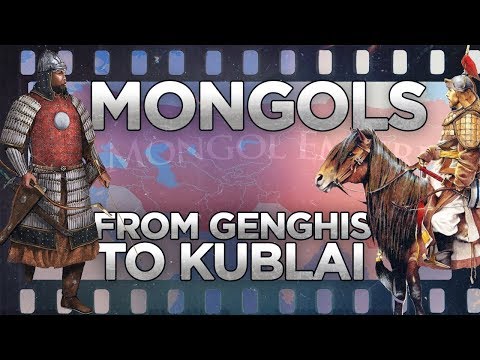
The Mongol Empire: A Deep Dive into Its Rise and Conquests (Genghis to Kublai)

The annals of history are replete with empires that have shaped the course of human civilization, but few loom as large or cast as long a shadow as the Mongol Empire. This vast dominion, forged in the crucible of nomadic steppe life and propelled by the relentless ambition of its leaders, fundamentally reshaped the geopolitical landscape of the 13th century and beyond. In this extensive exploration, we delve into the foundational years of the Mongol Empire, tracing its meteoric rise from the era of its founder, Genghis Khan, to the consolidation of power under his grandson, Kublai Khan. This article aims to provide a comprehensive overview for those seeking to understand the military, political, and cultural transformations that defined this pivotal period.

Introduction: The Genesis of an Empire

The story of the Mongol Empire is not merely one of military conquest; it is a narrative of exceptional leadership, strategic brilliance, and an unparalleled ability to adapt and integrate diverse cultures. Emerging from the ostensibly disparate tribes of the Eurasian steppe, the Mongols, under unified command, unleashed a force that swept across continents. This documentary and accompanying analysis focuses on the critical period of the empire's genesis and early expansion, covering the pivotal campaigns that laid the groundwork for one of history's largest contiguous land empires. We will examine the key figures, the significant battles, and the strategic objectives that characterized this transformative era.

Genghis Khan: The Architect of Unity

Born Temüjin around 1162 CE, Genghis Khan (meaning "universal ruler") rose from a precarious childhood marked by hardship and tribal conflict to become the supreme leader of the Mongol people. His genius lay not only in his military prowess but also in his capacity for political organization. He unified the fractious Mongol and Turkic tribes, not through brute force alone, but by implementing a meritocratic system, establishing a written script (the Uyghur-Mongolian script), and codifying laws known as the Yassa. This unification was the essential precursor to the empire's subsequent expansion. His vision was to create a lasting political entity, a stark departure from the ephemeral tribal confederations of the past.

The Mongol Empire was more than just a military machine; it was a complex socio-political entity that facilitated unprecedented cultural and technological exchange across Eurasia.

The Early Conquests: Forging a Path Through Asia

With the Mongols unified, their gaze turned outward. The early campaigns were directed towards neighboring sedentary societies, primarily the Jin Dynasty in Northern China, the Western Xia, and the Khwarazmian Empire in Central Asia. These conquests were characterized by brutal efficiency and innovative military tactics, including sophisticated siege warfare adapted from conquered peoples and highly mobile cavalry units capable of overwhelming numerically superior but less coordinated adversaries.

Key battles and campaigns during this foundational period include:

  • The Battle of Yehuling (1211): A decisive victory against the Jin Dynasty that opened the door for the conquest of northern China.
  • The Conquest of the Khwarazmian Empire (1219-1221): A devastating campaign that demonstrated Mongol military superiority in open warfare and siegecraft, stretching their dominion deep into Persia and Central Asia.
  • Subutai and Jebe's Great Raid (1221-1223): This reconnaissance-in-force saw two of Genghis Khan's most brilliant generals lead a cavalry army through the Caucasus and into Eastern Europe, culminating in the decisive Battle of Kalka River against a coalition of Rus' principalities and Kipchak forces. This raid provided invaluable intelligence about the lands and peoples to the west.

These early successes not only expanded the empire's territory but also instilled fear in potential enemies and attracted skilled individuals, from artisans to administrators, to the Mongol banner. The systematic nature of their campaigns, often involving the complete destruction of cities that resisted and the relocation of populations, ensured both the consolidation of conquered territories and the propagation of Mongol influence.

Succession and Continued Expansion

Upon the death of Genghis Khan in 1227, the question of succession arose. His third son, Ogedai Khan, was elected as the Great Khan. Under Ogedai's reign, the empire continued its relentless expansion. His reign saw the final subjugation of the Jin Dynasty, the invasion of the Rus' principalities and Eastern Europe (including the devastating Battles of Legnica and Mohi in 1241), and campaigns into the Southern Song Dynasty of China and towards the Middle East. The military genius of generals like Subutai and Jebe was instrumental in these successes, orchestrating campaigns across vast distances with remarkable coordination.

The empire was divided into khanates, ostensibly under the suzerainty of the Great Khan, but increasingly autonomous. The westernmost territories were largely governed by the Golden Horde, founded by Batu Khan (a grandson of Genghis), while the heartland of Central Asia remained under the Chagatai Khanate, led by Chagatai Khan. The Ilkhanate in Persia was founded by Hulagu Khan (another grandson), and the nascent Great Khanate in Mongolia and Northern China was initially overseen by Ogedai.

Kublai Khan: The Great Khan and the Yuan Dynasty

The mid-13th century saw internal strife and a succession crisis following the death of Ogedai and subsequent rulers. However, the empire's trajectory was re-energized by Kublai Khan, the fifth Great Khan, who reigned from 1260 to 1294. Kublai's ambition extended beyond military conquest; he sought to establish a stable, centralized administration and adopted many of the trappings of Chinese imperial rule. In 1271, he officially proclaimed the Yuan Dynasty, signaling a significant shift in the empire's identity.

Kublai Khan's reign was marked by:

  • The Conquest of the Southern Song Dynasty (completed 1279): This final conquest brought all of China under Mongol rule, a monumental achievement that integrated a vast and ancient civilization into the Mongol imperium.
  • Establishment of a Bureaucratic System: Kublai adopted and adapted Chinese administrative structures, employing both Mongols and, crucially, Chinese officials, fostering a period of relative stability and prosperity.
  • Failed Invasions of Japan (1274 and 1281) and Vietnam: These expeditions, though ultimately unsuccessful, highlight the continued ambition of the Mongol Empire to expand its influence, pushing the boundaries of maritime warfare.
  • Patronage of Arts and Sciences: Under Kublai, cities like Dadu (modern Beijing) flourished, becoming centers of trade, culture, and learning.

Kublai Khan represents a pivotal figure in Mongol history, bridging the gap between the nomadic conquerors and the rulers of a vast, settled empire. His efforts to Sinicize the Yuan Dynasty profoundly influenced the future of China.

The intricate web of trade routes, known collectively as the Silk Road, experienced a golden age under Mongol rule, facilitating the exchange of goods, ideas, and technologies between East and West.

The Enduring Legacy of the Mongol Empire

The Mongol Empire, despite its relatively short lifespan as a unified entity, left an indelible mark on world history. Its conquests facilitated the largest contiguous land empire ever known, connecting disparate regions and fostering unprecedented intercontinental exchange. The Pax Mongolica, a period of relative peace and stability across the empire, allowed for the safe passage of merchants, missionaries, and travelers, including figures like Marco Polo, whose accounts offered Europeans a glimpse into the exotic East. This exchange wasn't limited to goods; technologies, scientific knowledge, and even diseases, such as the Black Death, traversed the empire, impacting societies across continents.

From a sociological perspective, the Mongol Empire demonstrated the power of effective leadership and centralized organization in transforming nomadic societies into dominant political forces. Historically, their impact on the development of nation-states in Eastern Europe, the transformation of governance in China, and the spread of Islam in Central Asia are undeniable. The empire's legacy continues to be debated by historians, but its role in shaping the modern world is universally acknowledged.

Practical Guide DIY: Analyzing Historical Maps

Understanding the vast territorial expanse and strategic movements of the Mongol Empire is significantly aided by the study of historical maps. These visual representations offer invaluable insights into geopolitical boundaries, trade routes, and military campaigns. Here’s a practical guide to analyzing historical maps related to the Mongol era:

  1. Identify the Map's Scope and Time Period: Determine what region and time frame the map covers. For instance, a map focusing on Genghis Khan's early conquests will differ significantly from one depicting Kublai Khan's Yuan Dynasty. Look for dates or explicit mentions of rulers.
  2. Examine Key Geographical Features: Pay attention to rivers, mountains, deserts, and coastlines. These features often dictated the routes of conquest and the placement of settlements. For the Mongols, rivers like the Indus and Yangtze, and mountain ranges like the Altai, were crucial.
  3. Locate Major Cities and Capitals: Identify significant urban centers. For the Mongol Empire, cities like Karakorum (the early capital), Khanbaliq (Dadu/Beijing under Kublai), Samarkand, and Sarai (capital of the Golden Horde) are vital points of reference.
  4. Trace Routes of Conquest and Trade: Look for depicted military campaigns or trade routes (like the Silk Road). Note the direction and extent of these movements. Maps might show arrows indicating military advances or lines representing established trade networks.
  5. Analyze Political Boundaries and Territories: Observe how territories are demarcated. Understand which regions were under direct Mongol rule, which were tributary states, and which remained independent. Note the divisions into khanates.
  6. Consider the Mapmaker's Perspective: Be aware that historical maps can reflect the biases or knowledge limitations of their creators. Maps made by Europeans might emphasize different aspects than those made by scholars within the Mongol Empire or in conquered territories.
  7. Cross-Reference with Historical Texts: Always compare map information with written historical accounts to corroborate findings and gain a deeper understanding. For example, use the map to visualize the routes mentioned in battles like Kalka River or battles in Iran.

Frequently Asked Questions

What was the primary catalyst for the Mongol Empire's rapid expansion?

The primary catalyst was the unification of the disparate Mongol and Turkic tribes under Genghis Khan, transforming them from fragmented groups into a cohesive military and political force. His leadership, strategic brilliance, and the implementation of a meritocratic system were crucial.

What was the extent of the Mongol Empire at its peak?

At its peak in the late 13th century, the Mongol Empire was the largest contiguous land empire in history, stretching from Eastern Europe and the Levant across Asia to the Sea of Japan. It encompassed territories that today include China, Mongolia, Central Asia, parts of Russia, Persia, and the Indian subcontinent.

How did the Mongols govern their vast empire?

The Mongols employed a system that evolved over time. Initially, they relied on military governors and the Yassa law. Later, particularly under Kublai Khan, they adopted administrative structures from conquered civilizations, notably those of China (Yuan Dynasty), and established regional khanates with varying degrees of autonomy.

What was the significance of the Pax Mongolica?

The Pax Mongolica (Mongol Peace) was a period of relative stability across the empire. This peace facilitated safe travel and trade along the Silk Road, leading to significant cultural, technological, and economic exchange between East and West.

Did the Mongol Empire decline rapidly?

While the unified empire began to fragment into successor khanates in the late 13th and early 14th centuries, its influence persisted. The successor states, such as the Yuan Dynasty in China, the Golden Horde in Russia, and the Ilkhanate in Persia, continued for centuries, each leaving its own distinct historical legacy.

The rise of the Mongol Empire is a testament to human ambition, strategic acumen, and the transformative power of unification. From the steppes of Mongolia to the palaces of China, the legacy of Genghis Khan, Ogedai Khan, and Kublai Khan continues to fascinate and inform our understanding of history.

Unveiling the Kievan Rus': A DIY Intellectual Expedition into the Origins of Eastern Slavic Civilization

The tapestry of Eastern European history is woven with threads of migration, conquest, cultural synthesis, and the enduring spirit of its peoples. At its heart lies the enigmatic entity known as Kievan Rus', a civilization that laid the groundwork for modern Russia, Ukraine, and Belarus. Understanding its genesis, from the legendary arrival of the Rurikids to the cataclysmic Mongol invasions, is not merely an academic pursuit; it is an intellectual excavation that allows us to reconstruct the very foundations of a significant part of the European continent.

This article delves into the complex origins of Kievan Rus', examining its foundational myths, its societal structures, its religious transformations, and its intricate relationships with its powerful neighbors. We will explore the socio-political dynamics that shaped this medieval state, analyzing primary sources and historical interpretations to foster a deeper comprehension. Furthermore, we offer a practical framework for engaging with historical narratives, empowering the reader to become an active participant in understanding the past.

The Rurikid Foundation: From Norse Settlers to a Princely Dynasty

The traditional narrative of Kievan Rus' begins with the arrival of the Varangians, often identified with Norsemen or Vikings, in the 9th century. The Primary Chronicle, a foundational text for understanding this period, recounts the invitation of the Varangian chieftain Rurik to rule over the East Slavs, Finnic, and Baltic tribes in the Novgorod region around 862 CE. While the historicity of this direct invitation is debated among scholars, the influence of Norse peoples in establishing early state structures and trade routes is undeniable.

The Rurikid dynasty, through a series of sagas and conquests, gradually consolidated power, with Oleg of Novgorod famously capturing Kiev around 882 CE. This pivotal event shifted the center of power southward, establishing Kiev as the burgeoning capital of what would become Kievan Rus'. The Norse elite, while maintaining their distinct identity, gradually assimilated into the Slavic populace, adopting their language and customs, yet leaving an indelible mark on the political and military organization of the nascent state. This process of integration is a recurring theme in the anthropology of state formation, where external influences often catalyze internal consolidation.

The strategic location of Kiev, controlling key river trade routes like the Dnieper, was instrumental in its rise to prominence. This access facilitated trade with the Byzantine Empire and the Baltic, fostering economic growth and cultural exchange.

The Rurikids were not merely conquerors; they were astute rulers who organized administration, collected tribute, and defended their burgeoning territories. Their initial expansion was driven by a combination of trade, raiding, and the establishment of fortified settlements, characteristic of early medieval state-building in Northern Europe.

Early State Formation and the Eastern Slavic Peoples

Before the consolidation under Rurikids, the Eastern Slavic landscape was populated by various tribal confederations, including the Polyans, Drevlians, Severians, and Vyatichs. These tribes shared linguistic and cultural similarities but often engaged in inter-tribal conflicts and paid tribute to various overlords, most notably the Khazar Khaganate. The Khazars, a Turkic people, exerted significant influence over the trade routes of the region, acting as both protectors and exploiters of the Slavic tribes.

The rise of Kievan Rus' represented a shift from fragmented tribal societies to a more centralized political entity. The establishment of Kiev as the capital, coupled with the Rurikid administration, provided a unifying force. This process of state formation was complex, involving the gradual imposition of princely authority, the development of a proto-feudal system, and the integration of diverse tribal populations under a common leadership.

The economy of Kievan Rus' was largely agrarian, supplemented by lucrative trade, particularly in furs, honey, wax, and slaves. The control of these trade routes, especially the "route from the Varangians to the Greeks" along the Dnieper River, was a constant source of both wealth and conflict. Understanding this economic underpinning is crucial for appreciating the political motivations and military strategies of the era.

The Pivotal Role of Christianization

A transformative moment in the history of Kievan Rus' was its Christianization, predominantly under the reign of Prince Vladimir the Great in 988 CE. While Vladimir's grandfather, Sviatoslav, had maintained pagan traditions, Vladimir embraced Orthodox Christianity, reportedly after sending envoys to various religious centers, including Constantinople. This decision had profound and lasting consequences.

Orthodox Christianity provided Kievan Rus' with a unifying religious and cultural identity, aligning it more closely with the Byzantine Empire and separating it from Catholic Western Europe. The adoption of Christianity facilitated the development of written language through the Cyrillic alphabet, introduced by missionaries like Cyril and Methodius, which spurred the growth of literature, law, and education.

Christianization was not merely a spiritual conversion but a sophisticated geopolitical maneuver, enhancing Kiev's prestige and establishing diplomatic ties with the most powerful empire of the time.

The influence of Byzantium extended beyond religion, impacting art, architecture, and legal systems. The construction of grand churches, like the Desyatinnaya Church in Kiev, symbolized the new era and the growing power of the princely state. This cultural borrowing and adaptation is a common phenomenon in the history of civilizations, demonstrating how societies integrate external influences into their own unique frameworks.

Interactions with Neighbors: Byzantium and the Steppe Peoples

Kievan Rus' existed in a dynamic and often volatile geopolitical environment. To its south and east lay the vast steppe, home to numerous nomadic Turkic peoples, including the Pechenegs, Cumans (Polovtsians), and later the Mongols. These nomadic groups posed a constant threat, launching raids to plunder resources and capture slaves. The Rus' princes, in turn, engaged in both defensive warfare and offensive campaigns against these peoples, often employing tactics of both confrontation and diplomacy, including intermarriage and alliances.

The relationship with the Byzantine Empire (Eastern Roman Empire) was multifaceted. It was a source of religious and cultural inspiration, a major trading partner, and occasionally, a military ally or rival. Rus' mercenaries, particularly the famed Varangian Guard, played a significant role in Byzantine military campaigns. Rus' forces also launched significant expeditions against Constantinople, the Byzantine capital, seeking tribute and trade concessions. These interactions highlight the interconnectedness of medieval Eurasia.

To the west and north, Kievan Rus' interacted with Scandinavian polities, the Baltic tribes, and later, with the expanding powers of Central Europe, including the Teutonic Knights and other crusading orders. These interactions were marked by trade, occasional conflict, and the complex process of frontier expansion and defense.

The Shadow of the Mongols: Decline and Transformation

The 13th century witnessed the devastating arrival of the Mongol Empire under Batu Khan, grandson of Genghis Khan. The Mongol invasions, beginning in the 1230s and 1240s, were catastrophic for Kievan Rus'. Cities were razed, populations decimated, and established political structures shattered. The Battle of the Kalka River in 1223, an early encounter where a combined Rus'-Cuman force was defeated by a Mongol reconnaissance army, served as a grim precursor.

The subsequent full-scale invasion in 1237-1241 led to the destruction of Kiev and many other major centers. Kievan Rus' fragmented further, and the surviving principalities, including Novgorod, were forced to accept Mongol suzerainty, becoming part of the Golden Horde. The Mongol yoke, lasting for over two centuries in some regions, profoundly impacted the political, economic, and social development of Eastern Europe.

The Mongol invasions acted as a historical watershed, disrupting existing power dynamics and forcing a reorientation of political and cultural trajectories for the successor states.

While the invasions brought immense destruction, they also indirectly contributed to the rise of new centers of power, notably Moscow, which skillfully navigated its relationship with the Golden Horde to eventually consolidate Russian lands.

The Novgorod Republic: A Divergent Path

Amidst the fragmentation and Mongol domination, the Novgorod Republic presented a unique model of governance in northeastern Rus'. Benefiting from its northern location and less direct Mongol subjugation (initially paying tribute but maintaining internal autonomy), Novgorod developed into a powerful trading oligarchy. Its political system was characterized by a popular assembly (the veche), elected officials (like the posadnik), and a significant degree of civic participation, distinct from the autocratic tendencies seen in other Rus' principalities.

Novgorod's prosperity was built on extensive trade networks reaching into the Baltic, Scandinavia, and beyond. The Republic famously defended itself against the crusading Livonian Order and Swedish forces in battles like the Battle on the Ice (1242), famously led by Alexander Nevsky, who also served as Prince of Novgorod and secured a measure of accommodation with the Mongols. The story of Novgorod highlights the diversity of political structures within medieval Rus' and its resilience in the face of external pressures.

DIY Intellectual Toolkit: Deconstructing Historical Narratives

Engaging with the history of Kievan Rus', or any historical subject, can be approached as a "Do It Yourself" intellectual project. Here’s a practical guide to dissecting historical accounts:

  1. Identify the Core Narrative: What is the central story being told? In the case of Kievan Rus', it's the rise of a state from tribal beginnings, its interactions, and its eventual fragmentation and subjugation.
  2. Source Analysis:
    • Primary Sources: Recognize the foundational texts like the Primary Chronicle. Understand their context: who wrote them, when, and why? Note any potential biases or legendary elements.
    • Secondary Sources: Examine scholarly interpretations. Note the historians cited, their arguments, and their evidence. Are they presenting a consensus view or a dissenting opinion?
  3. Contextualization: Place the events and figures within their broader historical, geographical, and cultural setting. Consider the influence of neighboring powers (Byzantium, steppe nomads, Scandinavia), economic factors (trade routes), and religious developments (Christianization).
  4. Identify Key Entities and Concepts: Recognize the significance of terms like Rurikids, Varangians, Eastern Slavs, Khazars, Byzantium, Orthodox Christianity, Cyrillic alphabet, Mongol invasions, Golden Horde, Novgorod Republic, veche, etc.
  5. Analyze Causality and Consequence: How did specific events lead to others? For example, how did Christianization influence political alliances? How did the Mongol invasions lead to the decline of Kiev and the rise of Moscow?
  6. Recognize Debates and Interpretations: Understand that historical narratives are often contested. For instance, the exact role of the Varangians in founding Rus' is a subject of ongoing academic discussion. Be aware of different historiographical schools.
  7. Look for Patterns of Human Behavior: Identify recurring themes in state formation, cultural assimilation, conflict, diplomacy, and adaptation to environmental and political pressures. These patterns often transcend specific historical periods.
  8. Connect to Modernity: Consider how the legacy of Kievan Rus' continues to shape the identities and geopolitics of contemporary Eastern European nations.

By adopting this systematic approach, you can move beyond passive consumption of historical information to active, critical engagement, building your own informed understanding.

Frequently Asked Questions

Q1: Was Kievan Rus' a unified state, or a collection of principalities?
Initially, Kievan Rus' functioned as a relatively unified entity centered around Kiev, especially under strong rulers like Vladimir the Great and Yaroslav the Wise. However, over time, it evolved into a system of semi-independent principalities ruled by members of the Rurikid dynasty, with Kiev often retaining a titular primacy but experiencing periods of internal strife and fragmentation. The Mongol invasions further accelerated this process.

Q2: What was the primary language spoken in Kievan Rus'?
The primary spoken language was Old East Slavic, the ancestor of modern Ukrainian, Belarusian, and Russian. While the ruling elite had Norse origins, they were assimilated and adopted the Slavic tongue. The introduction of Christianity brought the Old Church Slavonic liturgical language and the Cyrillic script, which influenced the written form of Old East Slavic.

Q3: How did the Kievan Rus' differ from modern Russia or Ukraine?
Kievan Rus' is considered a foundational civilization for all three East Slavic nations. However, it predates the modern concepts of nation-states. Its legacy is interpreted differently by each nation, contributing to distinct national identities. For instance, while Moscow eventually became the center of a unified Russian state, Kiev holds a special place in Ukrainian national consciousness as its historical cradle.

Q4: Were the Mongols solely destructive to Kievan Rus'?
The Mongol invasions were undeniably devastating, causing immense destruction and loss of life. However, their rule (the Golden Horde) also introduced new administrative and taxation systems, facilitated some trade connections, and inadvertently contributed to the rise of Moscow as a new power center by weakening its rivals and through the strategic maneuvering of its princes.

Conclusion: The Enduring Legacy of Kievan Rus'

The story of Kievan Rus' is a compelling narrative of cultural fusion, political evolution, and resilience in the face of formidable challenges. From its semi-legendary Norse origins and the consolidation of power under the Rurikids, through the transformative embrace of Orthodox Christianity and complex interactions with Byzantium and the nomadic steppes, to the cataclysmic Mongol invasions that reshaped its destiny, Kievan Rus' stands as a critical epoch in Eastern European history.

Understanding this period is not merely about memorizing dates and names; it is about appreciating the intricate processes of state-building, the profound impact of cultural and religious shifts, and the enduring human capacity to adapt and rebuild. By employing a critical, DIY approach to historical inquiry, we can unravel the layers of this complex past and gain a deeper appreciation for the foundations upon which modern Eastern European societies were built. The echoes of Kievan Rus' resonate even today, reminding us of the deep historical roots that shape our present world.

Antropología, Historia, Sociología, Comprender Culturas, Exploración Histórica, DIY, Documental, EuropaAntesde1914

``` ```json { "@context": "https://schema.org", "@type": "FAQPage", "mainEntity": [ { "@type": "Question", "name": "Was Kievan Rus' a unified state, or a collection of principalities?", "acceptedAnswer": { "@type": "Answer", "text": "Initially, Kievan Rus' functioned as a relatively unified entity centered around Kiev, especially under strong rulers like Vladimir the Great and Yaroslav the Wise. However, over time, it evolved into a system of semi-independent principalities ruled by members of the Rurikid dynasty, with Kiev often retaining a titular primacy but experiencing periods of internal strife and fragmentation. The Mongol invasions further accelerated this process." } }, { "@type": "Question", "name": "What was the primary language spoken in Kievan Rus'?", "acceptedAnswer": { "@type": "Answer", "text": "The primary spoken language was Old East Slavic, the ancestor of modern Ukrainian, Belarusian, and Russian. While the ruling elite had Norse origins, they were assimilated and adopted the Slavic tongue. The introduction of Christianity brought the Old Church Slavonic liturgical language and the Cyrillic script, which influenced the written form of Old East Slavic." } }, { "@type": "Question", "name": "How did the Kievan Rus' differ from modern Russia or Ukraine?", "acceptedAnswer": { "@type": "Answer", "text": "Kievan Rus' is considered a foundational civilization for all three East Slavic nations. However, it predates the modern concepts of nation-states. Its legacy is interpreted differently by each nation, contributing to distinct national identities. For instance, while Moscow eventually became the center of a unified Russian state, Kiev holds a special place in Ukrainian national consciousness as its historical cradle." } }, { "@type": "Question", "name": "Were the Mongols solely destructive to Kievan Rus'?", "acceptedAnswer": { "@type": "Answer", "text": "The Mongol invasions were undeniably devastating, causing immense destruction and loss of life. However, their rule (the Golden Horde) also introduced new administrative and taxation systems, facilitated some trade connections, and inadvertently contributed to the rise of Moscow as a new power center by weakening its rivals and through the strategic maneuvering of its princes." } } ] }