Mostrando las entradas para la consulta Prohibition era ordenadas por relevancia. Ordenar por fecha Mostrar todas las entradas

The Sociology of Organized Crime: Profiling the Richest Mob Bosses in History

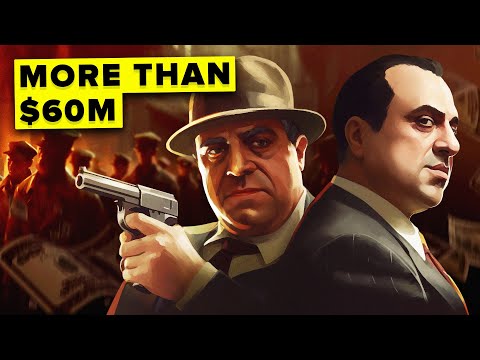
The adage "crime doesn't pay" often overlooks the complex economic and social structures that underpin organized criminal enterprises. While the legal and ethical implications of these activities are undeniable, a sociological and historical lens reveals fascinating patterns of wealth accumulation, power consolidation, and cultural influence. This article delves into the profiles of some of the wealthiest mob bosses throughout history, not to glorify their actions, but to understand the mechanisms of their success and their impact on society.

Introduction: Beyond the Myth

The popular imagination often associates mob bosses with a life of opulence, power, and a certain romanticized danger. While the reality is far more brutal and destructive, the immense wealth accumulated by figures like Al Capone, Pablo Escobar, and others warrants an anthropological and sociological examination. These individuals, operating outside the traditional economic framework, mastered illicit markets, exploited vulnerabilities, and built empires that, for a time, rivaled legitimate corporations in scale and influence. Their stories are not just tales of crime, but intricate case studies in power, social structures, and the global flow of illicit capital.

The Economic Engines of Organized Crime

Understanding the financial success of mob bosses requires dissecting the various industries they infiltrated and controlled. These often included:

  • Prohibition-era bootlegging: The illegal production and sale of alcohol during the Prohibition era in the United States created unprecedented opportunities for organized crime. Figures like Al Capone built vast fortunes through this venture.
  • Drug trafficking: From the mid-20th century onwards, the international drug trade became a primary source of income for powerful cartels, notably in Latin America. Pablo Escobar's Medellín Cartel is a prime example.
  • Gambling and Extortion: Traditional rackets involving illegal gambling operations, loan sharking, and protection rackets have long been staples of mob economies.
  • Money Laundering: The ability to clean and reintegrate illicit profits into the legitimate economy is crucial for any criminal enterprise. Sophisticated networks were developed to achieve this, often involving front businesses and international financial transactions.
  • Arms Trafficking: The illicit trade in weapons fuels conflicts and generates significant profits for organized groups operating in volatile regions.
"The very existence of a black market is a testament to unmet demand within the legal economy, a void that organized crime is all too eager to fill."

The scale of these operations often necessitated complex logistical networks, extensive networks of corrupt officials, and a ruthless approach to competition. The sheer volume of data generated and managed by these organizations in terms of supply chains, distribution, and enforcement is a topic worthy of its own study.

Notable Figures in Criminal Finance

Examining specific individuals provides a tangible grasp of the wealth and power wielded by top mob bosses. While precise figures are often speculative due to the clandestine nature of their operations, estimates consistently place several figures at the apex of illicit wealth:

  • Al Capone: Estimated net worth in the hundreds of millions of dollars during the 1920s, primarily from bootlegging and gambling. His empire in Chicago was a model of criminal organization.
  • Pablo Escobar: At his peak, Escobar was reportedly one of the wealthiest men in the world, with an estimated net worth of $30 billion, largely derived from the cocaine trade. He controlled a vast portion of the global cocaine market.
  • Meyer Lansky: A key financier of organized crime, Lansky was instrumental in establishing and managing vast gambling empires in Las Vegas and Cuba. His financial acumen was legendary.
  • John Gotti: Known as "The Dapper Don," Gotti led the Gambino crime family in New York, amassing considerable wealth through extortion, loan sharking, and various illegal enterprises.
  • Semion Mogilevich: Often described as the "boss of bosses" of the Russian mafia, Mogilevich is believed to have amassed billions through various schemes, including arms trafficking and financial fraud.

These figures represent different eras and criminal landscapes, yet they share a common thread: an ability to organize, exploit, and amass wealth on a grand scale, often leaving a devastating social and economic footprint.

Social Structures and Power Dynamics

Beyond mere financial transactions, the success of mob bosses relied heavily on intricate social structures and a sophisticated understanding of power dynamics. These organizations often mirrored legitimate corporations in their hierarchical structures, division of labor, and methods of enforcing discipline. The concept of 'honor among thieves' is a complex social construct that, while often idealized, played a role in maintaining internal cohesion and loyalty, albeit enforced through brutal means. Understanding the dynamics of comprender culturas within these subcultures is essential.

"Loyalty within these organizations was often a fragile construct, maintained not by shared values, but by a pervasive fear of reprisal and the allure of shared illicit gains."

The influence of these bosses extended beyond their criminal enterprises, impacting local economies, political systems, and even cultural narratives. Their stories have been immortalized in films and literature, reflecting a societal fascination with the darker side of human ambition and organization.

DIY Analysis: Deconstructing Criminal Hierarchies

To better understand the structure and operations of organized crime, we can employ a simplified analytical framework. This exercise encourages critical thinking about power structures, even in non-criminal contexts.

  1. Identify the Core Illicit Market: What is the primary source of income? (e.g., drug trafficking, illegal gambling, arms dealing). This forms the foundation of the criminal enterprise.
  2. Map the Supply Chain: How are goods or services acquired, transported, and distributed? Consider the logistics, geographical challenges, and potential points of failure. This involves understanding geographical distribution.
  3. Analyze Enforcement and Security: How is the operation protected from rivals and law enforcement? This includes internal security, use of violence, and bribery. This relates to concepts in cybersecurity in a digital context.
  4. Examine Financial Operations: How are profits generated, managed, and laundered? Identify front businesses, offshore accounts, and money laundering techniques. This is crucial for understanding economic growth, even in illicit sectors.
  5. Deconstruct the Hierarchy: Who is at the top? What are the roles of lieutenants, enforcers, and street-level operators? Understand the chain of command and communication. This maps onto general social structures.
  6. Assess External Relationships: How does the organization interact with corrupt officials, other criminal groups, or the wider community? This involves understanding international diplomacy and local power plays.

By applying this framework, one can begin to appreciate the complexity and strategic planning involved in running a large-scale criminal operation. It highlights how elements of organization and strategy, often seen in legitimate businesses, are also present, albeit in a perverted form, within criminal enterprises. This analytical approach is transferable to understanding various sociological phenomena.

Frequently Asked Questions

Q1: Is it possible to accurately determine the net worth of mob bosses?
A1: It is extremely difficult to determine exact figures due to the clandestine nature of their operations. Estimates are often based on known assets, scale of operations, and informant testimonies, and should be treated as approximations.

Q2: What were the most common industries controlled by mob bosses?
A2: Historically, common industries included bootlegging, gambling, loan sharking, extortion, drug trafficking, and later, arms dealing and financial fraud.

Q3: How did mob bosses maintain loyalty within their organizations?
A3: Loyalty was often maintained through a combination of shared illicit profits, intimidation, violence, a strict code of conduct (like omertà), and the creation of a perceived 'family' structure, though this was enforced by fear rather than genuine affection.

Q4: Did mob bosses have a significant impact on legitimate economies?
A4: Yes, through money laundering, front businesses, and corruption, mob bosses could significantly distort local and even national economies, siphoning capital away from legitimate enterprises and influencing political decisions.

Conclusion: A Sociological Perspective

The figures of the wealthiest mob bosses serve as potent symbols of the dark side of economic ambition and organizational power. Their illicit empires, built on violence, exploitation, and a profound understanding of human vices and societal vulnerabilities, offer a stark contrast to legitimate economic structures. By studying their rise and fall, we gain insights into the enduring nature of organized crime, its adaptability across different historical periods and geopolitical landscapes, and its deep-seated impact on society. Understanding these dynamics is crucial for developing more effective strategies to combat criminal organizations and for appreciating the complex interplay between legality, morality, and economic activity in the modern world.

Greatest Mafia Boss Quotes: A Sociological and Historical Exploration

Welcome to El Antroposofista, a space dedicated to the in-depth exploration of anthropology, archaeology, psychology, and history. In this post, we delve into the compelling world of organized crime through the lens of its most notorious figures, examining the enduring legacy of their pronouncements. This article aims to satisfy the reader's intent to understand the historical context, sociological impact, and psychological underpinnings of the rhetoric used by infamous mafia bosses, offering a blend of academic analysis and practical insight.

Introduction: The Allure of the Underworld

The figures of mafia bosses have long captivated the public imagination, often portrayed in popular culture as charismatic, ruthless, and possessing a unique, albeit dark, philosophy. Beyond the sensationalism, their words—the famous phrases and quotes attributed to them—offer a fascinating window into the structures of power, codes of conduct, and psychological landscapes of organized crime. This exploration seeks to dissect these utterances, moving beyond mere notoriety to understand their significance from anthropological, sociological, and historical perspectives. We aim to unravel the implicit meanings, the power dynamics, and the cultural resonance of these pronouncements, connecting them to broader societal trends and human behavior.

Historical Context: The Rise of Organized Crime

The phenomenon of organized crime, particularly the Italian-American Mafia, is deeply intertwined with specific historical and socioeconomic conditions. Its rise in the late 19th and early 20th centuries in the United States, for instance, can be traced to waves of inmigración, urban poverty, and the societal vacuum created by Prohibition. Early criminal organizations often emerged from immigrant communities, providing a sense of structure and illicit services in environments where legitimate opportunities were scarce. The historical trajectory of these groups reveals a complex interplay of ethnic identity, ciudadania challenges, and the evolution of law enforcement and societal attitudes. Understanding this context is crucial for interpreting the messages conveyed by its leaders.

"The street remembers. It never forgets." - Unknown Soldier of the Underworld.

The historical development of the Mafia, from its roots in Sicily to its expansion in America, showcases a remarkable adaptability. Each era presented new challenges and opportunities, shaping the organization's methods and its public image. The transition from labor racketeering and bootlegging to drug trafficking and infiltration of legitimate businesses reflects a strategic evolution driven by profit and power. The quotes from its leaders often encapsulate this pragmatic, sometimes brutal, approach to navigating these historical shifts.

Sociological Impact: Code, Loyalty, and Power

Sociologically, mafia organizations are characterized by their own distinct subcultures, hierarchies, and codes of conduct. Concepts like omertà (a code of silence), loyalty, respect, and family are paramount. The phrases uttered by bosses often reinforce these values, serving to maintain internal discipline and project an image of authority. These aren't just idle words; they are tools for social control within their tightly knit communities and instruments for exerting influence over external society.

The intricate web of relationships within a mafia family—often mirroring kinship structures—is a key area of anthropology and sociology. The boss is the patriarch, and their pronouncements carry the weight of familial decree. The emphasis on "family" is both literal and metaphorical, encompassing blood relatives and trusted associates, all bound by a shared commitment to the organization's goals. This internal social structure, reinforced by verbal directives, creates a formidable and often impenetrable social unit.

Psychological Dimensions: The Mindset of a Boss

From a psychology standpoint, the individuals who rise to the top of these organizations often exhibit traits associated with leadership, assertiveness, and a high tolerance for risk, alongside potential psychopathic or narcissistic tendencies. Their quotes can reveal a specific worldview—one that often justifies their actions through a distorted moral compass, emphasizing survival, strength, and a rejection of conventional societal norms. Understanding the psychological makeup of these leaders provides insight into their decision-making processes and the underlying motivations behind their infamous sayings.

The articulation of power through language is a critical psychological element. A boss's words can instill fear, command obedience, inspire loyalty, or express disdain. They are carefully chosen to project an image of control and invincibility. Analyzing these phrases allows us to explore themes of dominance, manipulation, and the construction of personal mythologies within the context of criminal enterprises.

"A wise man never knows how much he is able to do until he tries to do more." - Al Capone.

Notable Figures and Their Enduring Quotes

Throughout history, several mafia figures have become synonymous with power and intimidation, their words echoing through the annals of crime and popular culture. Figures like Al Capone, John Gotti, and Meyer Lansky, among others, have left behind a legacy of memorable, often chilling, phrases that encapsulate their philosophies and methods.

  • Al Capone: Known for his blend of ruthlessness and calculated public relations, Capone’s quotes often reflect a pragmatic, almost Machiavellian, approach to power. His infamous line, "You can get further with a smile and a gun than you can with just a smile," perfectly illustrates this duality.
  • John Gotti: The "Dapper Don" was renowned for his media savvy and his carefully crafted image. His pronouncements often touched on themes of loyalty and the perceived injustices of the legal system. A common sentiment attributed to him is, "I never hold a grudge. But I never forget."
  • Meyer Lansky: A brilliant strategist and accountant for the mob, Lansky’s quotes often betray a keen understanding of finance and power. He is credited with saying, "I don't have to kill them. I can buy them."
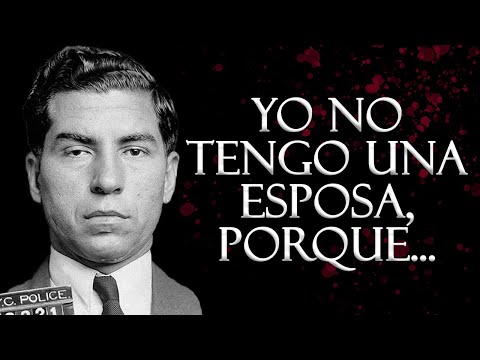
  • Lucky Luciano: Considered a pivotal figure in the reorganization of the American Mafia, Luciano’s foresight into the industry of crime is evident in his words, such as, "Crime is a matter of circumstances. It belongs to the same class as the people who are in it."

These quotes, while seemingly simple, are rich in semiotic meaning. They speak to the internal logic of criminal organizations, the justification of violence, and the perception of outsiders. Analyzing them requires an understanding of the historical milieu in which they were spoken and the specific audiences they were intended for—whether fellow mobsters, law enforcement, or the general public.

DIY Practical Guide: Analyzing Symbolic Language in Quotes

For those interested in delving deeper into the power of language, understanding symbolic communication is key. This guide provides a step-by-step approach to analyzing the symbolic language embedded within any impactful quote, whether from a historical figure, a political leader, or a cultural icon.

  1. Identify the Core Message: What is the literal statement being made? Try to summarize it in one sentence.
  2. Contextualize the Speaker and Era: Who said this quote, and when? Research their background, historical period, and the circumstances surrounding the utterance. For instance, understanding Al Capone's era of Prohibition is crucial to grasping the meaning of his gun quote. You can find historical context for many figures through reputable sources like encyclopedias or Britannica.
  3. Deconstruct Key Terms: Break down the quote into its essential words or phrases. What are the connotations of these words? Are there any double meanings, slang, or jargon being used?
  4. Identify Metaphors and Analogies: Is the speaker using figurative language? Are they comparing abstract concepts to concrete objects or actions? For example, "buying people" in Lansky's quote is a metaphor for corrupting them financially.
  5. Analyze the Tone and Emotion: What is the underlying feeling conveyed by the quote? Is it threatening, reassuring, dismissive, or authoritative?
  6. Consider the Implied Audience: Who was the speaker likely addressing? Their inner circle? The public? Their rivals? The intended audience shapes the message's delivery and meaning.
  7. Evaluate the Sociological and Psychological Significance: What does this quote reveal about the speaker's values, beliefs, and the social group they represent? Does it reinforce a specific ideology, code of conduct, or power dynamic? For example, a quote about loyalty reveals the importance of ComprenderCulturas and intra-group cohesion.
  8. Synthesize Findings: Combine your observations to form a comprehensive interpretation of the quote's symbolic meaning and its broader impact.

Frequently Asked Questions

Q1: Why are quotes from mafia bosses so famous?
A: Their fame stems from a combination of factors: the inherent public fascination with crime and power, the charismatic personalities of some leaders, and the often-dramatic and brutal nature of their world, which lends itself to memorable, impactful statements.

Q2: Do these quotes accurately reflect the daily lives of mafia members?
A: While some quotes offer glimpses into their code and worldview, they are often curated or stylized. The reality of daily life in organized crime involves complex operations, internal politics, and constant risk, which may not be fully captured by a single phrase.

Q3: Can studying these quotes offer any valuable insights beyond the criminal underworld?
A: Yes, studying these phrases can offer insights into leadership, power dynamics, the psychology of persuasion, the sociological importance of codes and loyalty, and the construction of identity—concepts applicable to many other fields, from business to political science and AntropologíaVirtual.

Conclusion: Lessons from the Shadows

The phrases attributed to great mafia bosses are more than just sensational soundbites; they are artifacts of history, sociology, and psychology. They offer a profound, albeit cautionary, insight into the human capacity for organization, ambition, and the construction of alternative social orders outside the mainstream. By dissecting their words, we not only understand the dynamics of criminal enterprises but also gain a deeper appreciation for the complex forces that shape human behavior and societal structures. The enduring allure of these figures and their pronouncements speaks volumes about our collective fascination with power, transgression, and the shadowy corners of human experience.